
Hospitals & Clinics: Automatic Soap Dispensers and Hygiene Standards
In healthcare environments, automatic soap dispensers are engineered components within a critical infection-prevention system. This page gives architects, engineers and spec writers a specification-focused view on hygiene performance, durability, accessibility, sustainability and standards alignment.
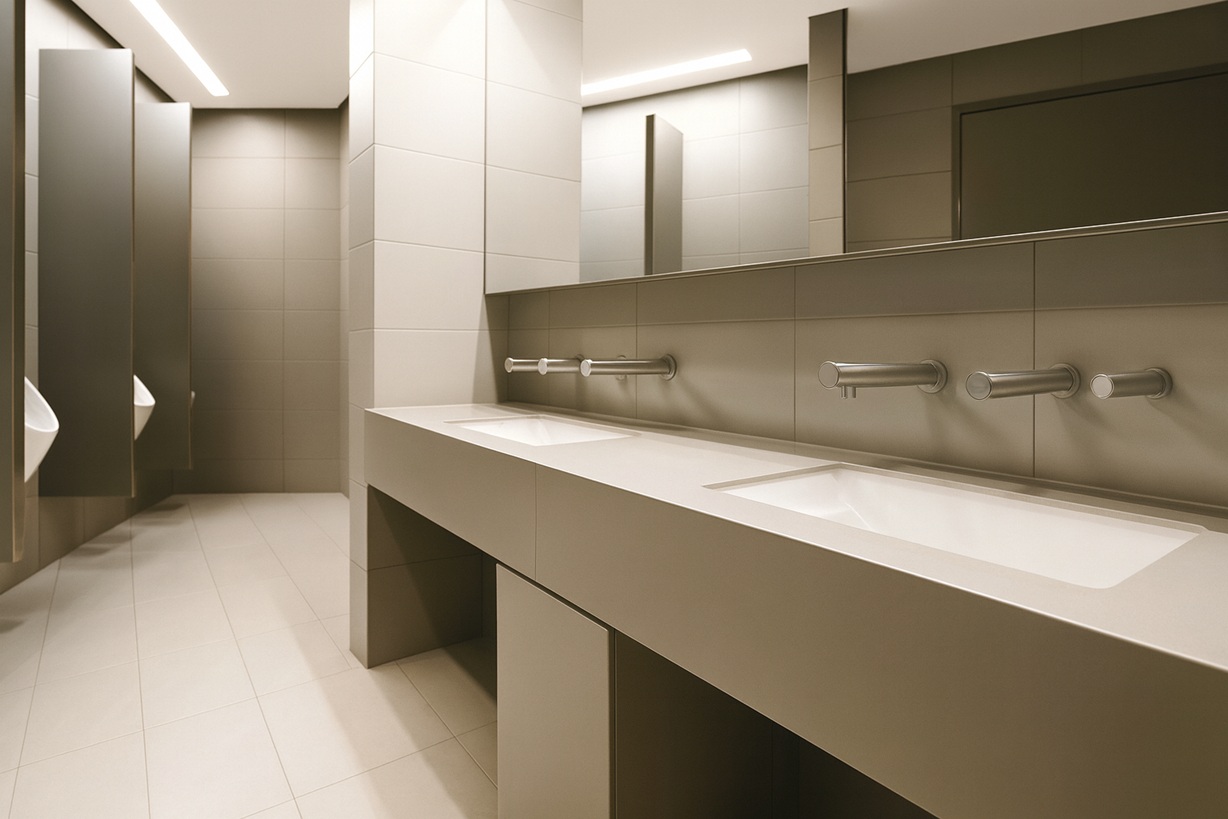
Hand Hygiene in Healthcare: Standards and Expectations
Global and National Guidance
The World Health Organization’s “Guidelines on Hand Hygiene in Health Care” establish hand hygiene as the primary measure to reduce healthcare-associated infections (HAIs). The U.S. Centers for Disease Control and Prevention (CDC) likewise treats hand hygiene as foundational to infection prevention in all healthcare settings, from acute-care hospitals to outpatient clinics and long-term care.
Automatic soap dispensers influence whether these guidelines are achievable in practice by affecting compliance, dosing reliability, cross-contamination risk and availability at the point of care.
Role of Automatic Soap Dispensers
In clinical areas, automatic dispensers support:
- Higher compliance: no lever or push pump to touch; intuitive hand-in-zone activation.
- Standardized dosing: defined volume for each hand hygiene event.
- Reduced fomite potential: fewer shared touch surfaces at the actuation point.
These characteristics are translated into performance specifications that have to be taken into account when designing the healthcare project.
Performance Requirements in Medical Environments
Response Time and Sensor Reliability
In hospitals and clinics, workflow interruptions are unacceptable. Dispensers near patient rooms, procedure areas and staff workstations must:
- Trigger reliably in fractions of a second.
- Avoid “dead zones” where hands are present but are not detected.
- Reduces false activations from passers-by or reflective surfaces.
These specifications should include defined response times of sensors, sensing distances, and performance characteristics under typical ambient lighting and reflectivity conditions encountered in healthcare interior spaces.
Dosing Accuracy and Clinical Adequacy
Several automatically generated articles are published in the American Journal of Infection Control about output volumes from automatic hand-hygiene dispensers; most note that an adequate dose should be delivered in a consistent way.
From a specification perspective, design teams should:
- Define a nominal dose per actuation (for example, ≥ 1.0 mL for alcohol rubs, or the volume recommended by infection-control policy for liquid or foam soaps).
- Require tolerance bands over the life of the device, such as a maximum percentage variation.
- For multi-mode devices, indicate dosage ranges for high-risk versus low-risk zones.
Cleanability and Chemical Resistance
The housing of the dispenser as well as other components must be able to with stand frequent cleaning or disinfection with products designated by the hospital’s infection control team. The requirements include:
- Smooth, non-porous surfaces with minimal crevices.
- Materials resistant to a variety of common hospital disinfectants such as alcohol, quaternary ammonium compound, and, if used, chlorine.
- Geometry that avoids horizontal ledges or dirt traps.
These criteria should be documented in Division 10 or Division 22 sections and coordinated with environmental services protocols.
Hygiene Metrics and Monitoring
Compliance and Event Logging
Automated monitoring technologies are increasingly used to track hand-hygiene events, correlate them with clinical workflows and identify compliance gaps. Infection Control Today describes how emerging technologies—including dispenser-based sensors and RTLS badges—support adherence and reduce HAIs.
Dispenser systems may:
- Count activations per location and time block.
- Report reservoir level and battery status.
- Integrate with dashboards used by infection prevention and nursing leadership.
Hospital project requirements need to address whether these functionalities will be required and detail what is expected in terms of interfacing in data format and update speed.
Uptime, Stock-Outs and Redundancy
In clinical practice, a dispenser that is empty or inoperative undermines hygiene protocols. Performance metrics should include:
- Uptime percentage (operational and stocked).
- Maximum acceptable duration of a stock-out in clinical zones.
- Requirements for visual or electronic alerts when soap or battery levels are low.
Redundancy—multiple dispensers in critical zones—and high-capacity reservoirs can further reduce the risk of unavailability.
Accessibility: ADA Requirements in Healthcare Facilities
ADA Regulatory Framework
Hospitals and clinics need to ensure the hand-washing station hardware becomes an integral part of the environment designed for access. The 2010 ADA Standards for Accessible Design guidelines were published by the United States Accessibility Guidelines Administrative Committee Department of Justice, define scoping and technical requirements for reach ranges, operable parts and protrusion limits. Supplemental information and guidance is available from the U.S. Access Board.
Key ADA Constraints for Soap Dispensers
For automatic soap dispensers in hospitals and clinics, key ADA considerations include:
- Reach range: operable parts generally within 15–48 inches above finished floor for unobstructed reaches.
- Operable parts: usable with one hand and without tight grasping, pinching or twisting of the wrist; minimal operating force (touchless sensors inherently satisfy force criteria).
- Protrusion: objects between 27 and 80 inches above finished floor should not project more than 4 inches into circulation paths.
Design Implications at Patient and Public Interfaces
- At least one dispenser at each accessible lavatory or hand-hygiene station must fully comply with ADA reach and space requirements.
- Elevations should dimension dispenser centers relative to finished floor and lavatory front edges, rather than leaving installation to field interpretation.
- For patient rooms, family areas and public waiting zones, ensure dispensers do not obstruct grab bars, handrails or maneuvering clearances.
Durability, ASME/NSF Alignment and Clinical Reliability
Plumbing and Materials Standards Background
Although many automatic soap dispensers are not plumbed in the same way as faucets, they often share environments and mounting conditions and, in some integrated systems, assemblies. Understanding plumbing and materials standards used for related fixtures is useful in specification.
ASME A112.18.1/CSA B125.1 covers plumbing supply fittings, setting requirements for design, materials and performance testing. In situations where the components of the dispenser come into contact with potable water (e.g., in combined faucet and soap-dispenser modules or multi-functional fittings), cross-references to standards related to potable water materials can add extra assurance.
Even when not formally required, aligning dispenser materials and corrosion resistance with the expectations of these standards supports system durability and maintainability in harsh cleaning regimes.
Mechanical Endurance and Service Life
In high-acuity and high-traffic zones, dispensers may be actuated thousands of times per week. Specifications should address:
- Minimum cycle-life expectations before failure.
- Availability of replacement parts and assemblies.
- Resistance to impact and tampering in public or behavioral health settings.
These requirements can be framed similarly to the endurance provisions used for plumbing fittings, adapted to the dispenser’s actuation mechanism and mounting arrangement.
Water, Sustainability and Regulatory Alignment
WaterSense Principles and Faucet Coordination
The EPA WaterSense program sets water-efficiency and performance criteria for fixtures such as lavatory faucets, toilets and urinals. Although WaterSense does not directly certify soap dispensers, dosing and rinsing behavior are tied to faucet flow rates.
In healthcare projects that use WaterSense-labeled faucets or similar low-flow devices, dispensers must avoid over-dosing that would require prolonged rinsing, and the wet–lather–rinse sequence must remain practical for clinicians with high workloads.
CALGreen and Healthcare Projects
The California Green Building Standards Code (CALGreen) includes mandatory and voluntary measures for water efficiency, energy conservation and material resource efficiency. For hospitals and clinics subject to CALGreen or relatable frameworks:
- Automatic dispensers controlling soap use have an indirect relationship with water conservation as they regulate the rinsing time and discourage water waste.
- Bulk or closed-refill systems can reduce packaging waste and transport frequency.
Life-Cycle Assessment in Healthcare Context
Life-cycle evaluation for automatic dispensers in hospitals and clinics should consider:
- Soap usage per patient-day or per occupied bed.
- Packaging and transport impacts for cartridges or bulk refills.
- Maintenance labor, replacement intervals and end-of-life strategies.
Where infection control permits, high-capacity or centralized refill systems may confer advantages in terms of waste reduction as well as staff efficiency.
System Integration and Clinical IT Infrastructure
Smart Dispensers in Hospitals and Clinics
Many current-generation healthcare dispensers are designed to integrate with clinical IT and facility-management systems. Typical capabilities include:
- Actuation counting per dispenser.
- Time-stamped usage data by location.
- Refill and battery status reporting to central dashboards.
Infection-control teams can use these data to correlate product usage with campaign periods, outbreaks or compliance initiatives.
Integration Considerations for Design Teams
When specifying smart dispensers, AEC teams should:
- Clarify network connectivity expectations (wired, wireless, gateway devices).
- Coordinate power provisions (low-voltage supply, backup battery operation).
- Note requirements for segregation from clinical information systems or for cybersecurity review.
This information is best documented in Division 22 or 25 in combination with the dispenser section and coordinated with clinical engineering and IT stakeholders.
Specification Checklist for Hospital and Clinic Projects
A concise checklist for design and specification teams:
Hygiene and Performance
- Define dose volume, tolerance and any clinical minimums.
- Specify sensor response time and detection range.
- Require cleaning and chemical compatibility documentation.
Accessibility (ADA)
- Dimension mounting heights and clearances to meet ADA reach ranges.
- Confirm touchless operation and low-force requirements.
- Check protrusion limits in corridors and waiting areas.
Durability and Standards Alignment
- Align materials and performance with expectations from ASME A112.18.1/CSA B125.1 where applicable.
- Consider NSF/ANSI 61 where dispenser components contact potable water.
- Define endurance and service-life expectations for high-traffic zones.
Sustainability and Water Use
- Coordinate dosing and rinse behavior with WaterSense-type faucet performance.
- Document how dispensers support CALGreen or equivalent sustainability goals for water, waste and maintenance.
System Integration
- Electronic monitoring, usage reportage, or BMS integration requirements need to be defined.
- Coordinate power, data, and access for maintenance with the MEP and IT teams.
Key Reference URLs
Use these resources to support infection-control narratives, confirm regulatory requirements and align dispenser specifications with healthcare standards.