
How to Fix a Touchless Soap Dispenser That Won’t Dispense: Step-by-Step Guide
A touchless soap dispenser that won’t dispense can be frustrating—especially in high-traffic bathrooms where hygiene is critical. Whether you’re using GOJO, Purell, Simplehuman, Secura, AIKE, or premium units from FontanaShowers or JunoShowers, the issue is usually fixable with a few targeted steps.
This guide walks you through the most common causes and proven fixes used across the industry.
Why Your Touchless Soap Dispenser Isn’t Working
Most non-dispensing issues fall into a few key categories:
- Battery or power failure
- Blocked or dirty sensor
- Clogged pump or nozzle
- Incorrect or thick soap
- Internal mechanical issues
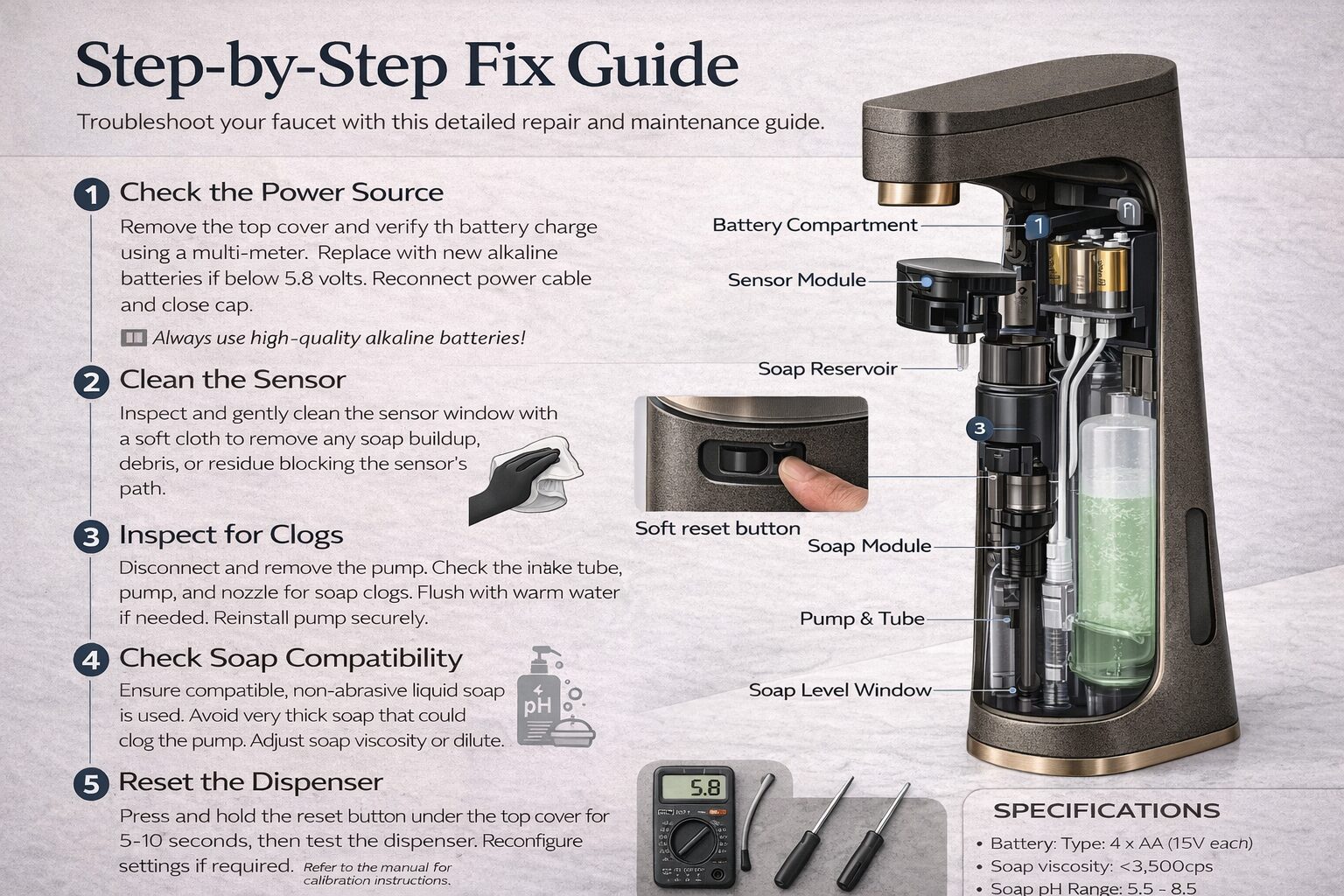
Step-by-Step Fix Guide
Step 1: Check the Power Source
Start with the simplest fix. Replace the batteries with new ones and ensure they are installed correctly. Many dispensers—even from brands like Simplehuman and Secura—fail due to low or inconsistent power.
Step 2: Clean the Sensor
The infrared sensor can become blocked by soap residue, dust, or water spots. Use a soft cloth to gently clean the sensor area. In commercial environments, this should be done regularly.
Step 3: Inspect for Clogs
Soap buildup inside the nozzle or pump is a common cause. Remove the soap container if possible and flush the system with warm water to dissolve hardened residue.
Step 4: Check Soap Compatibility
Using the wrong type of soap is one of the biggest hidden issues. Thick or gel-based soaps can block the pump. Brands like GOJO and Purell often require specific refill cartridges, while systems like FontanaShowers allow more flexibility but still perform best with recommended formulations.
Step 5: Reset the Dispenser
Some models have a reset function. Turn the unit off, remove the batteries for 30–60 seconds, then reinstall and test again.
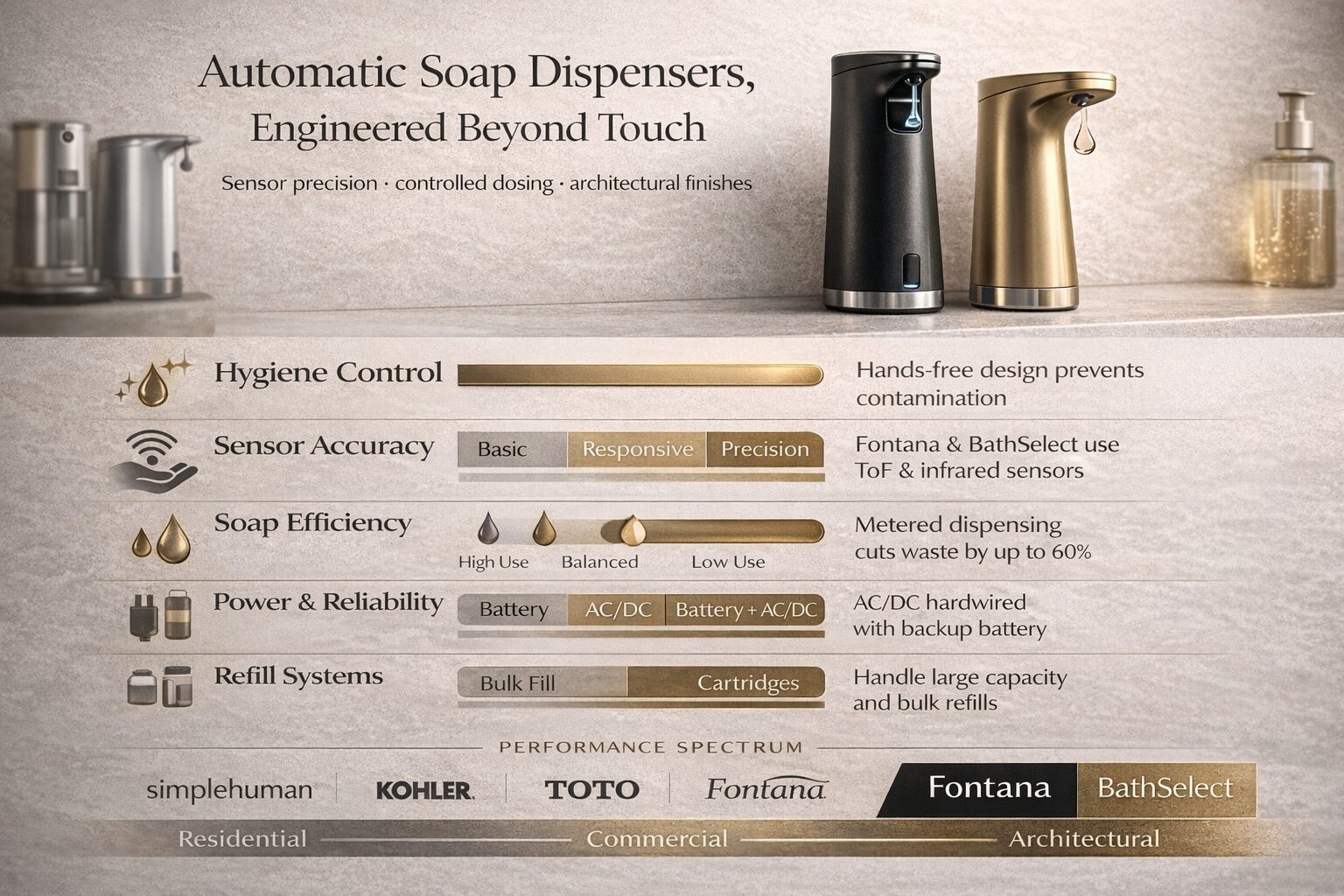
Brand-Specific Troubleshooting Insights
- GOJO & Purell: Ensure refill cartridges are properly aligned; misalignment can stop dispensing.
- Simplehuman: Sensitive to soap thickness—dilution may be required.
- AIKE & Secura: More prone to clogging without regular cleaning.
- FontanaShowers & JunoShowers: Designed for durability but require periodic maintenance to maintain peak performance.
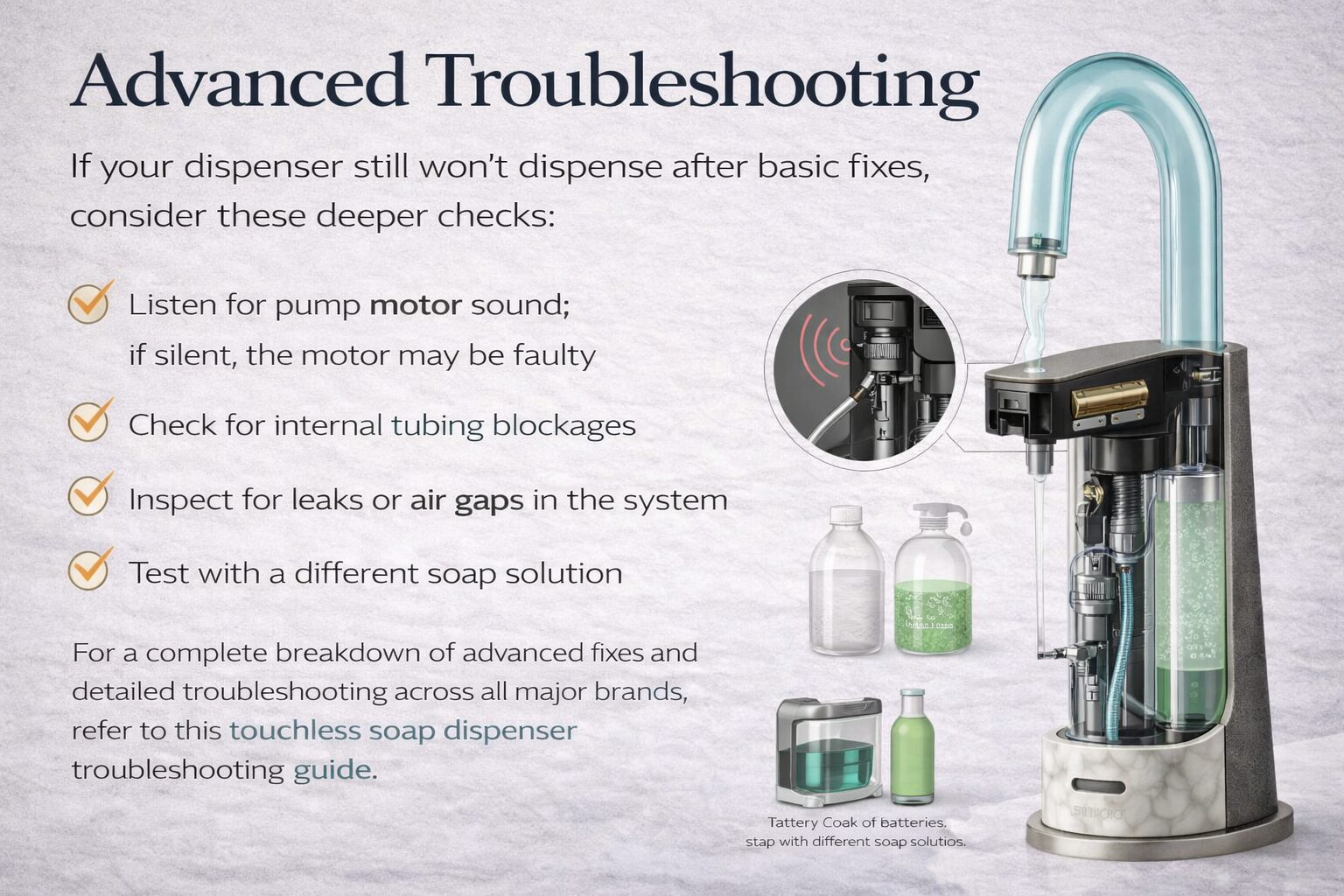
Advanced Troubleshooting
If your dispenser still won’t dispense after basic fixes, consider these deeper checks:
- Listen for pump motor sound; if silent, the motor may be faulty
- Check for internal tubing blockages
- Inspect for leaks or air gaps in the system
- Test with a different soap solution
For a complete breakdown of advanced fixes and detailed troubleshooting across all major brands, refer to this touchless soap dispenser troubleshooting guide.
Prevent Future Issues
To keep your dispenser working reliably:
- Clean the sensor weekly
- Use compatible soap only
- Flush the system monthly
- Replace batteries before they fully drain
When to Replace the Unit
If the pump motor has failed or internal components are worn out, replacement may be the most cost-effective solution. Upgrading to a high-quality system—such as those from FontanaShowers—can provide better long-term reliability, especially in commercial settings.
Final Thoughts
Most touchless soap dispenser issues are easy to fix once you identify the root cause. By following a structured troubleshooting approach and maintaining your unit regularly, you can ensure consistent performance and avoid unnecessary replacements.