
Touchless Without Helplessness: Designing Reliable Automated Restroom Fixtures
Automation can reduce unnecessary contact and support hygiene confidence, but a touchless fixture becomes a liability when the sensor is unpredictable, the activation window is too rigid, the battery is weak, or the system removes control from the user.


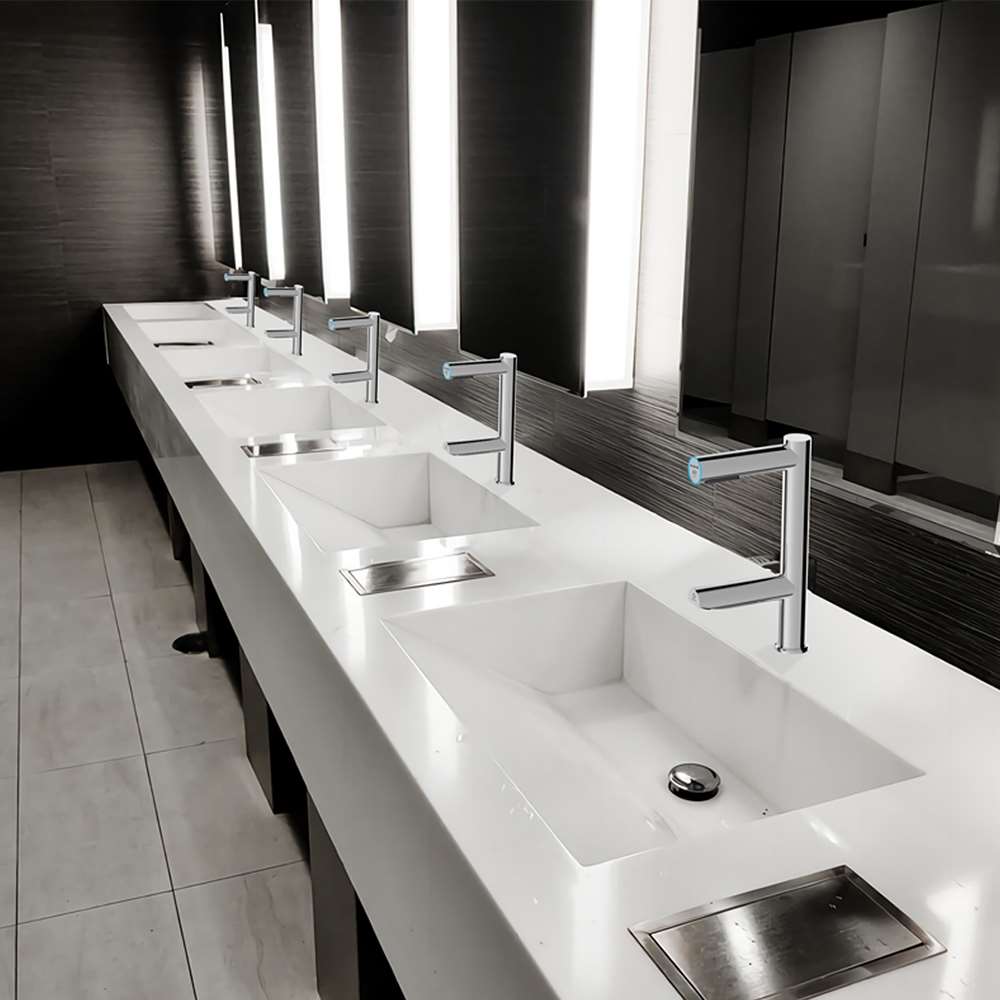
Reliability Comes Before Novelty
In a large venue, faucets, soap dispensers, flush valves and dryers may cycle thousands of times during one event. A small failure rate can therefore become a major operational problem when repeated across hundreds of fixtures.
Read More
False activations, missed detections, clogged aerators, inconsistent sensing and weak batteries all undermine confidence in a system that was intended to feel effortless.
Automation Can Become Behavioral Control
A touchless faucet that runs only for a short, fixed interval may work for a quick rinse but poorly for washing an injury, cleaning a child’s hands, filling a container, brushing teeth or assisting another person.
Read More
Likewise, an automatic toilet that flushes repeatedly while someone is still seated does more than annoy the user. It removes agency at a vulnerable moment and makes the technology feel intrusive rather than supportive.
Predictability Is Part of Accessibility
Users should be able to understand what will happen when they approach a fixture. Activation zones, timeout logic, water duration, visual or tactile feedback and sensor response all contribute to whether the interaction feels controllable.
Read More
Children, people with limited mobility, caregivers and users performing atypical tasks can expose weaknesses that remain invisible when a fixture is tested only around a standard adult use case.
Power Architecture Matters
Hundreds of battery-operated fixtures can create a significant replacement workload. Large venues may benefit from carefully planned AC or AC/DC systems depending on the building strategy and maintenance model.
Read More
Power planning should be treated as part of the restroom infrastructure rather than an afterthought added once fixtures have already been selected. Accessible power architecture can simplify future servicing and reduce unnecessary fixture downtime.
Serviceability Protects Uptime
Technicians need practical access to sensors, cartridges, solenoids, valves, batteries and soap systems. Difficult access increases service time and can turn a small failure into a longer outage.
Read More
Standardizing platforms across the venue can further reduce spare-parts complexity, improve maintenance familiarity and make troubleshooting more consistent across multiple restroom locations.
The Design Principle
The central principle is simple: touchless without helplessness. Automation should reduce unnecessary physical contact without removing reasonable user control or making common restroom tasks harder to complete.
Read More
Touchless fixtures should therefore be evaluated by reliable activation, understandable behavior, accessibility, maintainability and the confidence with which people can use them—not merely by whether infrared sensing technology is present.
| Design factor | What to evaluate | Why it matters |
|---|---|---|
| Sensor detection | Immediate, consistent activation | Reduces hesitation and repeated hand movement |
| Timeout logic | Enough time for real tasks | Prevents premature shutoff or unnecessary repeated cycles |
| Flush behavior | Predictable activation | Reduces unexpected flushing while the fixture is occupied |
| Power strategy | Serviceable and scalable infrastructure | Helps control battery replacement and maintenance burden |
| Maintenance access | Fast component inspection and replacement | Reduces fixture downtime and service complexity |
Read More: The Agency Problem in Automated Fixtures
Expanded Context
Public restroom technology often assumes a narrow sequence of actions. Human-centered automation recognizes that people may need more time, assistance, different body positioning or a task the designer did not predict.
The goal is not to remove automation. The goal is to make it reliably supportive rather than controlling, ensuring that convenience, hygiene, accessibility and practical user agency remain balanced.