CommercialSoapDispenserAuto.com
Dose Calibration & Dispense Volume: Optimising Automatic Soap Dispensers in High-Traffic Washrooms
In high-traffic washrooms, precise dose calibration can reduce soap waste by up to 30–40% while maintaining effective hand hygiene. Aligning dispense volume with soap viscosity and sensor timing improves consistency, lowers refill frequency, and reduces overall operating costs without compromising user experience or compliance standards.
This technical reference lines up with the core purpose of commercialsoapdispenserauto.com and supports architects, engineers, specifiers, facility managers, and infection-control experts working in high-traffic environments such as healthcare, transportation, education, and public venues.
Automatic Soap Dispensers Within the Washroom Hygiene System

In commercial restrooms, automatic soap dispensers operate as part of an integrated hygiene and plumbing ecosystem which consist of:
- Touchless faucets and flush systems
- Handwashing workflow and user circulation
- Infection-control and public health strategies
- Facilities maintenance and supply logistics
Apart from the residential installations, soap dispensers in commercial settings should perform reliably under continuous usage, resist misuse, and maintain stable dosing over time. Calibration decisions should therefore be coordinated early with washroom layout, sensor-based fixtures, and operational planning.
A centralized technical reference for automatic soap dispensing systems can be found at commercialsoapdispenserauto.com.
Performance Expectations and Standards Affecting Soap Dispensing
While soap dispensers are not governed by plumbing codes in the same way as faucets, their performance is evaluated through intersecting hygiene, accessibility, and operational criteria. The design teams need to consider:
- Public health and infection-control guidelines for hand hygiene
- Accessibility considerations for touchless activation
- Compatibility with sensor-based washroom systems
- Facility maintenance and refill logistics
Open documentation of dispense volume, calibration adjustability, and sensor behavior assists to prevent operational issues after installation.
Dispense Volume, Calibration, and User Behavior

Mostly users don’t interact with soap dispensers uniformly. instead, they respond to perceived adequacy. When a dispenser releases too little soap, users trigger multiple cycles. When it releases too much, product is wasted unintentionally.
- Under-dosing increases repeat activations and queue friction
- Over-dosing increases consumption, residue, and refill frequency
- Perceived adequacy influences hygiene compliance
Optimised calibration balances hygiene effectiveness with realistic user behavior rather than relying on factory default settings.
Sensor Logic, Lockouts, and Dose Consistency
In high-traffic washrooms, sensor logic plays a critical role in maintaining consistent dispense volume. Detection range, lockout timing, and timeout behavior must work together to prevent nuisance dispensing and repeated dosing.
- Defined dispense volume per activation
- Lockout timing to prevent rapid re-triggering
- Hard timeouts to prevent continuous operation
Touchless system coordination references are available at JunoShowers and Automatic Faucet.
Soap Type, Viscosity, and Dispensing Performance
Dispense volume cannot be evaluated independently of soap formulation. Foam, liquid, and gel soaps react differently under sensor-driven pumps and impact users perceive adequacy.
- Foaming soaps typically require lower volumes
- Liquid soaps may require higher doses to avoid re-triggering
- Gel formulations demand real-world testing for drift
Calibration must always be verified using actual soap product that are specified for the facility.
Commissioning, Maintenance, and Calibration Stability
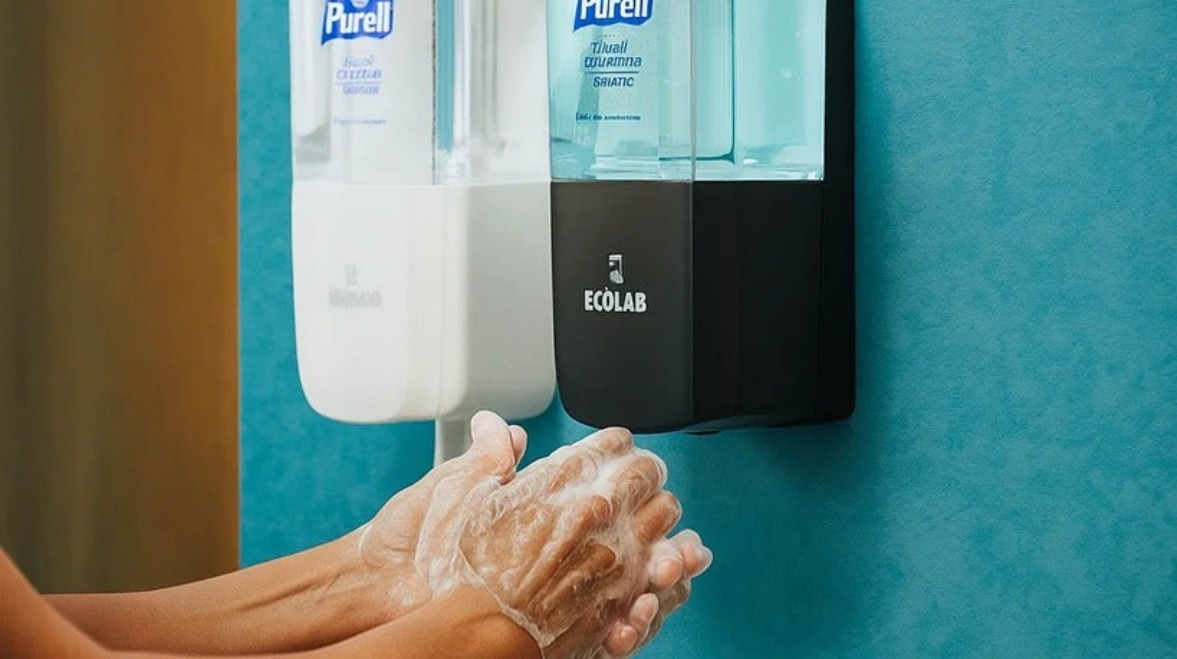
Dispense calibration is not a single-time activity. Over time, mechanical wear, battery degradation, and residue buildup can change the output volume.
- Verify dispense volume during commissioning
- Document settings in O&M manuals
- Train facility staff on adjustment procedures
- Recheck calibration after maintenance or soap changes
Reviewing Automatic Soap Dispenser Categories

The review of category-level references helps specifiers understand how various systems approach sensor logic, calibration, durability, and hygiene integration.
The related resources are available at CommercialSoapDispenserAuto.com, FontanaShowers, Commercial Sensor Faucets, BathSelect, and JunoShowers.
Conclusion
Dose calibration and dispense volume are critical performance variables in automatic soap dispensers for high-traffic washrooms. When accurately optimized, calibrated dispensing supports hygiene advantages which reduces waste, and improves operativel efficiency.
As a system-level design and maintenance choice rather than a product environment, AEC practitioners have a chance to design functional washrooms, regardless of how poorly a calibrated toilet functions.
This aspect reflects the core purpose of commercialsoapdispenserauto.com.