Commercial Automatic Soap Dispensers: 2026 Reviews & Comparison
A commercial automatic soap dispenser is designed for repeated hands-free use in public and high-traffic restrooms where sensor reliability, refill capacity, controlled soap dosing, serviceability, and long-term durability matter more than residential convenience. This guide compares wall-mounted, deck-mounted, liquid, foam, cartridge, bulk-fill, and high-capacity automatic soap dispensers for facilities such as airports, hospitals, schools, universities, office buildings, hotels, restaurants, stadiums, and public buildings.
Best Commercial Automatic Soap Dispensers at a Glance
Different commercial environments require different dispenser architectures. These categories identify the strongest use case for each type rather than assuming one dispenser is ideal for every project.
Commercial Automatic Soap Dispenser Comparison
The table below compares the principal commercial characteristics that facility managers, architects, contractors, and procurement teams should evaluate.
| Product | Best For | Mount | Soap Type | Capacity | Refill System | Commercial Score |
|---|---|---|---|---|---|---|
| PURELL ES8 | Busy public restrooms | Wall | Foam | 1200 mL | Cartridge | 4.6 / 5 |
| Georgia-Pacific enMotion | Large facilities | Wall | Foam | 1800 mL | Cartridge | 4.6 / 5 |
| Rubbermaid One Shot | Commercial counters | Deck | Liquid | 800–1600 mL | Cartridge | 4.5 / 5 |
| Bradley Automatic | Institutional projects | Deck | Liquid | Up to 54 oz | Cartridge | 4.5 / 5 |
| BathSelect Sensor Deck Mount | Architectural restrooms | Deck | Liquid | Model dependent | Reservoir | 4.4 / 5 |
| Zogics Touch-Free | Schools, gyms, offices | Wall | Foam | 1000 mL | Refillable | 4.3 / 5 |
| OneShot Counter Mount | Integrated vanity design | Deck | Liquid | Model dependent | Under-counter | 4.3 / 5 |
How We Evaluate Commercial Automatic Soap Dispensers
Commercial dispensers should be judged on more than appearance or purchase price. Our evaluation emphasizes reliability, maintenance burden, refill architecture, installation, and suitability for repeated public use.
Commercial Automatic Soap Dispenser Reviews
These reviews focus on how each dispenser fits real commercial applications, including refill access, mounting strategy, capacity, appearance, maintenance, and expected facility use.
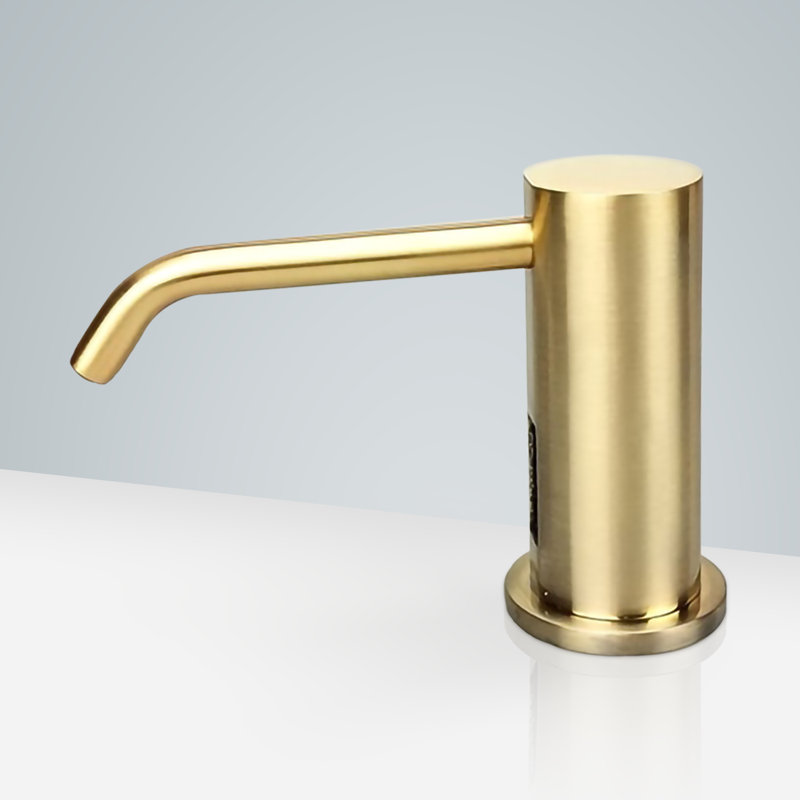
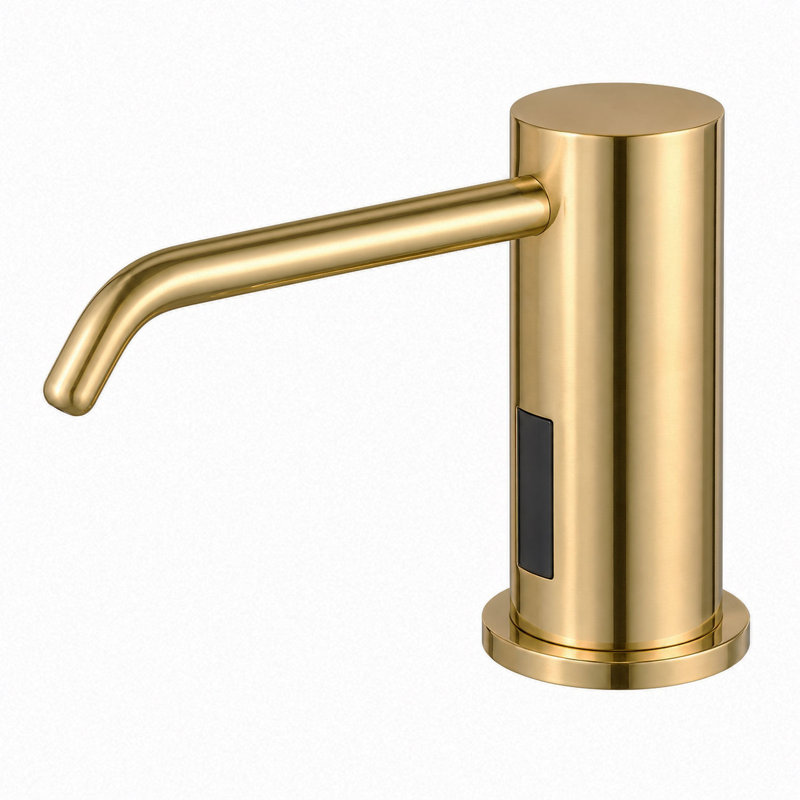
BathSelect Automatic Sensor Deck-Mount Soap Dispenser
The BathSelect deck-mounted automatic soap dispenser is best suited to projects where commercial hygiene equipment must coordinate visually with faucets, countertops, and premium restroom finishes. Unlike exposed plastic wall units, the dispenser body is integrated into the sink deck, producing a cleaner architectural appearance.
For office buildings, hospitality projects, restaurants, premium public restrooms, and other design-sensitive facilities, the deck-mounted format provides a strong balance between hands-free operation and visual integration. Designers should verify below-counter reservoir access, soap compatibility, sensor placement, and service clearance before final specification.
- Architectural deck-mounted appearance
- Hands-free dispensing
- Coordinates with commercial faucets
- Suitable for premium restroom projects
- Requires countertop penetration
- Under-counter access should be planned
- Reservoir capacity depends on model
- Finish coordination may affect price
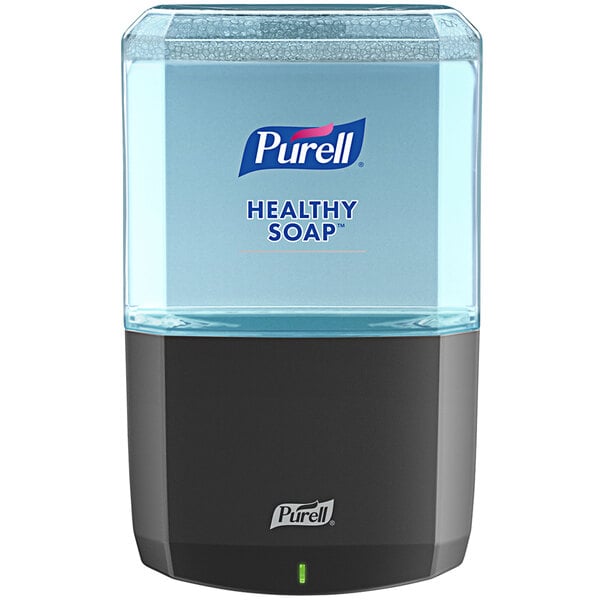
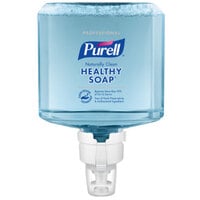
PURELL ES8 1200 mL Automatic Hand Soap Dispenser
The PURELL ES8 is a practical wall-mounted commercial automatic soap dispenser for facilities that prioritize straightforward maintenance, standardized refills, and predictable servicing. Its 1200 mL capacity makes it suitable for restaurants, schools, offices, healthcare support areas, and other frequently used restrooms.
The primary advantage of this type of system is maintenance consistency. Cartridge-based refill systems can reduce spills and make inventory easier to standardize, although facilities should account for the long-term cost and availability of proprietary refill consumables.
- Commercial wall-mounted format
- 1200 mL capacity
- Controlled refill system
- Good fit for high-use facilities
- Proprietary refill ecosystem
- Visible wall-mounted housing
- Refill cost should be evaluated
- Less architectural than deck-mounted systems
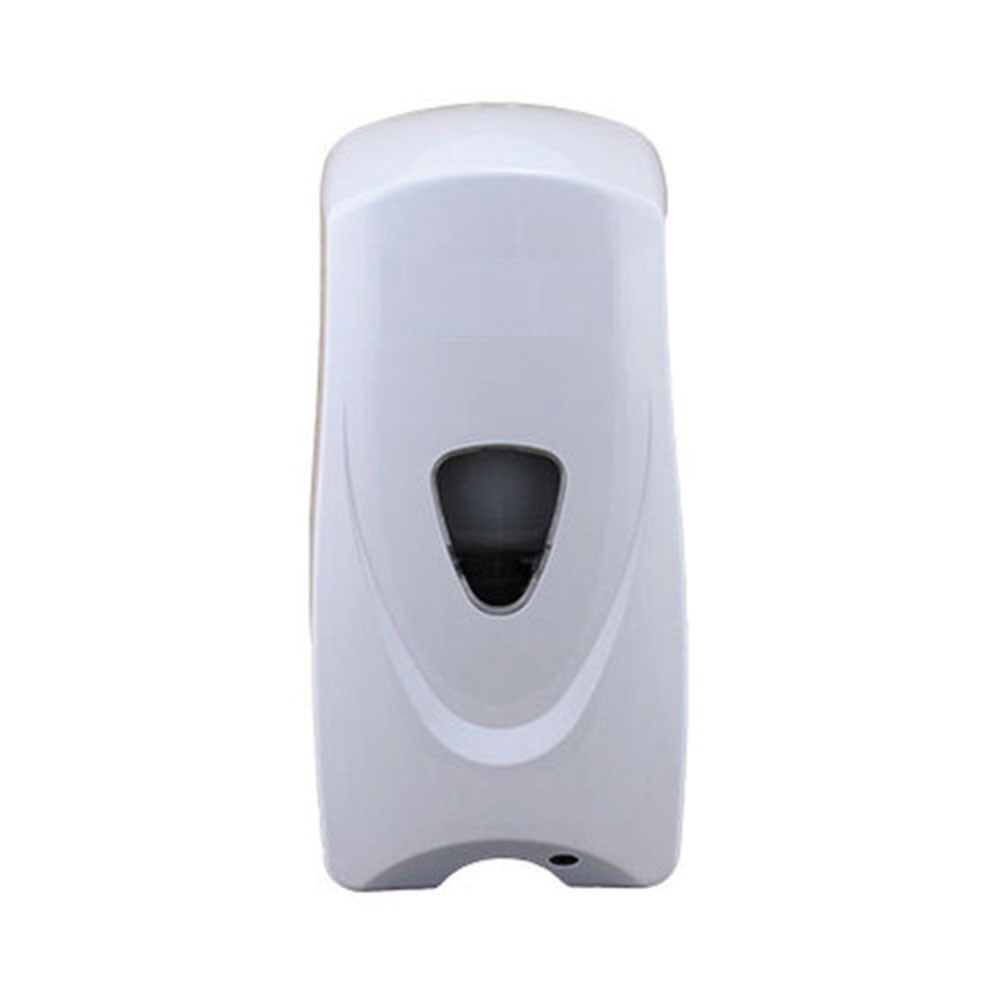
Zogics Touch-Free Automatic Foam Soap Dispenser
The Zogics touch-free foam dispenser is designed for facilities that need simple wall mounting and a relatively large 1000 mL soap capacity. It is suitable for schools, fitness centers, offices, clinics, institutional restrooms, and other commercial spaces where decorative fixture coordination is less important than straightforward servicing.
Foam systems can reduce the quantity of liquid soap delivered during each activation because the product is aerated before dispensing. Facilities should still verify refill compatibility, pump design, and the availability of replacement components before standardizing the dispenser across multiple locations.
- 1000 mL capacity
- Simple wall installation
- Touch-free foam dispensing
- Suitable for institutional applications
- Wall housing remains visible
- Foam pumps require compatible soap
- Less suited to luxury restroom design
- Maintenance access should be reviewed
Bobrick B-2013 Automatic Wall-Mounted Foam Dispenser
The Bobrick B-2013 is oriented toward institutional and specification-driven commercial washrooms. Stainless construction, lockable access, refill visibility, and a 27 oz capacity make this type of dispenser relevant to schools, office buildings, public facilities, healthcare environments, and transportation restrooms.
Institutional buyers should place particular emphasis on vandal resistance, replacement-part availability, refill visibility, and how easily maintenance personnel can open, service, and restore the dispenser during routine rounds.
View Product
OneShot Touch-Free Counter-Mounted Soap Dispenser
Counter-mounted automatic dispensers are a strong choice when the restroom design calls for a cleaner vanity surface without a large soap dispenser housing mounted on the wall. The OneShot format places the visible dispensing head at the counter while the soap supply and service components remain below.
The design works well in commercial office restrooms, hospitality environments, restaurants, public buildings, and other facilities that want an integrated fixture appearance. Designers should plan below-counter clearance carefully so refill access does not conflict with plumbing, waste lines, power supplies, or storage.
View Product
Georgia-Pacific enMotion Automatic Soap Dispenser
The Georgia-Pacific enMotion automatic soap dispenser is particularly relevant to high-volume facilities because of its large 1800 mL capacity. Larger reservoirs can reduce refill frequency in airports, universities, stadiums, public buildings, office towers, transportation terminals, and other heavily used washrooms.
Capacity alone should not determine selection. Facility teams should also evaluate dose volume, refill cost, battery or power requirements, service access, consumable availability, and the number of daily activations expected at each fixture location.
View Product
Rubbermaid Commercial One Shot Counter Dispenser
The Rubbermaid Commercial One Shot is designed for facilities that want automatic soap dispensing integrated directly into the sink deck. Counter-mounted systems can create a more orderly restroom appearance while keeping the larger soap supply concealed beneath the counter.
This format is especially useful where facilities want standardized liquid-soap delivery across multiple restrooms. Before specifying any deck-mounted system, confirm refill volume, cartridge compatibility, mounting dimensions, service clearance, and whether components can be replaced without removing the complete fixture.
View Product
Bradley Deck-Mount Automatic Soap Dispenser
Bradley’s deck-mounted automatic soap dispenser is a specification-friendly choice for commercial sink decks, institutional restrooms, education facilities, office buildings, healthcare projects, and public washrooms. The system is relevant where designers want hands-free operation combined with a larger liquid-soap cartridge configuration.
For institutional projects, the most important considerations are not only the dispenser head but also cartridge availability, under-counter service access, replacement pump availability, sensor serviceability, and the facility’s expected annual activation volume.
View Product
BathSelect Wall-Mount Stainless Steel Automatic Dispenser
This stainless steel BathSelect automatic dispenser offers a more architectural alternative to basic plastic wall-mounted soap units. It can be useful in offices, clinics, hotels, restaurants, public restrooms, and support areas where wall mounting is preferred but appearance remains important.
Stainless steel housings may also provide better resistance to repeated cleaning and public use than lightweight decorative plastics, although finish quality, sensor design, pump access, soap compatibility, and internal service components should still be reviewed individually.
View Product
BathSelect Dax Touchless Faucet and Automatic Soap Dispenser Set
Coordinated touchless faucet and automatic soap dispenser sets are useful where architects want plumbing fixtures to appear as a unified system rather than unrelated components. The BathSelect Dax configuration pairs both fixtures in a matching finish for upscale office, hospitality, restaurant, executive, and public restroom projects.
Coordinated specification can also simplify finish selection, sink-deck planning, visual alignment, and fixture spacing. Designers should still verify that faucet and soap sensors operate independently and that their detection zones do not interfere with one another after installation.
View ProductHow to Choose a Commercial Automatic Soap Dispenser
Commercial automatic soap dispenser selection should begin with operating conditions, not appearance alone.
Sensor Performance
Commercial sensors should activate predictably when a hand enters the intended detection zone while minimizing false dispensing caused by sink reflections, moving objects, nearby fixtures, or changing ambient conditions. Sensor placement becomes particularly important when the dispenser is installed close to a touchless faucet.
Mounting Type
Wall-mounted dispensers are generally easier to retrofit and service, while deck-mounted dispensers provide a cleaner architectural appearance. Deck systems require countertop drilling and sufficient under-counter space for reservoirs, wiring, cartridges, pumps, and service access.
Power Source
Automatic soap dispensers may operate from batteries, low-voltage power supplies, hardwired systems, or hybrid arrangements. Battery systems simplify retrofit installation, while powered systems may be preferred on large projects where facility teams want to reduce routine battery replacement.
Soap Capacity
Capacity determines how often maintenance personnel must refill the dispenser. Small cartridge systems may be suitable for lower-volume restrooms, while large reservoirs or centralized soap systems can significantly reduce refill labor in airports, universities, stadiums, and other high-use buildings.
Soap Dose
Controlled dose volume affects annual soap consumption. A small difference in milliliters per activation can become significant when multiplied across hundreds of thousands of handwashing events. Excessive dosing increases consumable cost and may also create sink residue.
Soap Viscosity
Pumps must be compatible with the viscosity and formulation of the selected soap. Using soap outside the manufacturer’s recommended range can cause inconsistent dosing, slow recovery, pump strain, clogging, or complete dispensing failure.
Material & Construction
Stainless steel and metal-bodied dispensers are often preferred in specification-driven spaces because they can better coordinate with commercial faucets and may withstand repeated cleaning more effectively. Plastic housings remain common where cost and easy replacement take priority.
Serviceability
Commercial buyers should determine whether pumps, batteries, cartridges, sensors, control modules, reservoirs, and other wear components can be serviced individually. A lower purchase price provides little value if a minor component failure requires complete dispenser replacement.
Liquid vs Foam Commercial Automatic Soap Dispensers
Both systems are widely used in commercial restrooms, but they differ in pump design, dose characteristics, soap consumption, refill requirements, and user experience.
| Factor | Liquid Soap | Foam Soap |
|---|---|---|
| Dispensing Form | Concentrated liquid dose | Aerated foam dose |
| Soap Volume per Use | Often higher | Often lower |
| Pump Design | Liquid pump | Air-and-soap foaming pump |
| Maintenance | Generally straightforward | Foaming mechanism requires compatible soap |
| User Experience | Dense liquid application | Pre-aerated soap |
| Commercial Use | Extremely common | Extremely common |
| Best Selection Basis | Soap program, fixture design and maintenance strategy | Soap program, consumption goals and pump compatibility |
Deck-Mount vs Wall-Mount Automatic Soap Dispensers
Deck-Mounted Dispensers
Deck-mounted automatic soap dispensers are integrated directly into the countertop or sink deck. They are commonly selected for architectural restrooms because the visible dispenser head can coordinate with the faucet and other plumbing fixtures.
The tradeoff is installation complexity. Designers must account for countertop drilling, below-counter reservoirs, power supplies, hoses, pump assemblies, waste piping, faucet hardware, and maintenance clearance.
Wall-Mounted Dispensers
Wall-mounted automatic dispensers are generally easier to install in existing facilities and are widely used in schools, hospitals, restaurants, airports, public buildings, offices, and institutional restrooms.
They can simplify refill access but place the entire dispenser housing in view. The best choice depends on whether retrofit simplicity, vandal resistance, capacity, architectural appearance, or maintenance efficiency is the primary project requirement.
Cartridge vs Bulk-Fill vs Top-Fill vs MultiFeed Systems
Refill architecture can have a larger impact on long-term operating cost than the initial dispenser price.
| System | Best Application | Refill Labor | Capacity | Consumable Flexibility | Main Consideration |
|---|---|---|---|---|---|
| Cartridge | Small to medium commercial facilities | Low | Medium | Often limited | Proprietary refill cost |
| Individual Bulk Reservoir | Commercial deck systems | Medium | Medium | Higher | Under-counter access |
| Top-Fill | Busy commercial counters | Low | Medium to high | Often flexible | Requires compatible top-fill architecture |
| MultiFeed / Centralized | Airports, stadiums, universities, large buildings | Very low per dispenser | Very high | Project dependent | Higher initial coordination |
Best Commercial Automatic Soap Dispenser by Facility Type
Facility traffic, maintenance staffing, design standards, refill access, and vandal exposure should guide product selection.
Commercial Soap Dispenser Operating Cost
Purchase price represents only one part of the dispenser’s total cost. Facilities should also evaluate soap consumption, refill labor, batteries, replacement components, and maintenance downtime.
Soap Consumption
Annual soap consumption is largely determined by dose volume multiplied by the number of activations. Even a difference of 0.3 mL per activation can produce a meaningful annual difference across high-volume facilities.
Refill Frequency
A larger reservoir reduces the number of service visits required. Facilities should compare reservoir capacity against expected daily activations rather than selecting capacity based only on physical size.
Labor
Refill labor includes locating the dispenser, opening the housing, replacing or pouring soap, cleaning spills, recording inventory, and closing the unit. Across hundreds of dispensers, these small service events become a significant operating expense.
Replacement Components
Pumps, sensors, battery packs, hoses, solenoids, control boards, and reservoirs should ideally be replaceable individually. Systems that require complete fixture replacement after a minor failure can produce higher lifecycle cost.
Commercial Automatic Soap Dispenser Specification Checklist
Before approving a dispenser for a project, verify the following items for the exact model and installation condition.
Automatic vs Manual Commercial Soap Dispensers
Manual dispensers can still be appropriate in some commercial projects, but they should be evaluated separately from automatic touch-free systems.
Automatic Commercial Dispensers
Automatic dispensers reduce physical contact with the dispenser body and provide controlled soap delivery. They require sensors, power, pumps, and associated service components, but are preferred when touch-free operation is a core hygiene or design objective.
Manual Commercial Dispensers
Manual dispensers are mechanically simpler and can be less expensive to maintain. Products such as top-fill deck-mounted dispensers remain useful where reliability, simplicity, and easy above-counter refilling are more important than automatic activation.
Commercial Automatic Soap Dispenser FAQs
What makes an automatic soap dispenser commercial grade?
Commercial-grade dispensers are designed for frequent daily activation, repeatable dosing, dependable sensor performance, service access, refill management, durable materials, and replacement-part availability. The strongest systems are selected around expected traffic and lifecycle maintenance rather than purchase price alone.
How much soap should an automatic dispenser dispense?
The correct dose depends on the soap formulation and facility requirements. Commercial systems should provide enough soap for effective handwashing without excessive product use. Small changes in dose volume can have a significant effect on annual soap consumption in high-traffic buildings.
Are foam soap dispensers cheaper to operate?
Foam systems can use less liquid product per activation because the soap is mixed with air before dispensing. Actual operating cost depends on refill price, dose setting, traffic, proprietary cartridge requirements, maintenance, and product concentration.
Which is better: wall mount or counter mount?
Wall-mounted dispensers are generally easier to retrofit and service. Counter-mounted dispensers provide a cleaner architectural appearance but require countertop drilling and sufficient under-counter space for reservoirs, pumps, tubing, power, and maintenance access.
Can automatic dispensers use any liquid soap?
No. Soap chemistry and viscosity must fall within the pump manufacturer’s recommended range. Using incompatible soap can cause slow dispensing, clogging, inconsistent dosing, pump wear, or failure.
How often do commercial automatic soap dispensers need refilling?
Refill frequency depends on reservoir capacity, dose volume, and daily activation count. A high-traffic restroom may require substantially more frequent servicing than an office restroom using the same dispenser.
Are top-fill soap dispensers easier to maintain?
Top-fill systems can reduce under-counter service work because maintenance personnel add soap from above the counter. This can be especially useful where plumbing, cabinetry, or accessibility constraints make below-counter reservoir access difficult.
When does a centralized MultiFeed system make sense?
Centralized soap delivery becomes attractive when multiple dispensers operate in the same restroom or facility and refill labor is significant. A larger shared reservoir can reduce the number of individual refill events required across the system.
How important is sensor placement?
Sensor placement is critical. The dispenser should detect the user’s hand without being triggered by the sink, faucet, reflective surfaces, or nearby movement. Coordinated touchless faucet and soap installations should be commissioned to confirm that detection zones do not interfere.
What should facility managers check before standardizing one dispenser?
Confirm refill cost, replacement-part availability, pump serviceability, sensor reliability, soap compatibility, mounting requirements, power strategy, cleaning procedures, reservoir capacity, and supplier support before deploying the same model across a large facility.
Choosing the Best Commercial Automatic Soap Dispenser
The best commercial automatic soap dispenser is not simply the unit with the largest reservoir or lowest purchase price. High-performing commercial systems balance sensor reliability, controlled dosing, refill efficiency, mounting requirements, soap compatibility, serviceability, replacement-part availability, and the facility’s expected traffic.
Wall-mounted cartridge systems remain practical for straightforward retrofits and standardized maintenance. Deck-mounted automatic dispensers provide stronger architectural integration. Large-capacity and centralized systems become increasingly valuable as restroom traffic and maintenance labor increase.
Before final specification, compare the exact model’s capacity, power requirements, refill architecture, soap compatibility, dimensions, replacement components, warranty, and installation requirements against the operating conditions of the project.