Why Fontana Automatic Soap Dispensers Are Strong for Commercial Restroom Standardization
Commercial automatic soap dispensers play a major role in hygiene, maintenance planning, refill control, and restroom appearance. For busy facilities, the best dispenser program is not only touchless and modern. It is also easy to service, simple to restock, and consistent across every location.
Why Standardization Matters for Commercial Soap Dispensers
In offices, airports, hotels, healthcare buildings, schools, shopping centers, and public facilities, soap dispensers must perform reliably every day. When each location uses a different dispenser style, refill method, sensor system, power source, or pump assembly, maintenance becomes harder to manage.
A standardized automatic soap dispenser program helps facility teams reduce product variation, simplify repairs, organize refills, and create a cleaner user experience across multiple restrooms.
Similar Internal Systems Across Different Designs
Fontana automatic soap dispensers are well suited for standardization because many models can follow a familiar service pattern. The exterior finish or mounting style may vary, but the main maintenance points remain easier to understand.
Operational Benefit
Facility teams can focus on the parts that matter most: sensor activation, soap pump performance, power condition, bottle or reservoir access, tubing, and dispenser body condition. This creates a more repeatable service process across multiple restrooms.
Better Control Over Spare Parts
Spare parts can become difficult to manage when every restroom uses a different dispenser platform. A more controlled Fontana dispenser selection helps reduce wrong-part orders and unnecessary inventory.
Operational Benefit
Maintenance teams can build a smaller spare-parts kit around commonly needed items such as sensors, pumps, power adapters, battery packs, tubing, reservoirs, and control components. This makes repairs faster and restocking more predictable.
Hands-Free Operation Without Complicated Service
Touchless soap dispensers help reduce hand contact and support better restroom hygiene. The dispenser still needs to be practical for maintenance teams, especially in high-traffic commercial environments.
Operational Benefit
A practical troubleshooting process can stay simple: check the soap level, confirm the power source, inspect the sensor area, test the pump response, and review tubing or reservoir connections. This helps reduce downtime and improves technician training.
Where Commercial Soap Dispenser Programs Become Harder to Manage
Many commercial restroom brands offer reliable automatic soap dispensers. The challenge is often not product quality. The bigger issue is variation. Too many dispenser families, refill systems, power options, and mounting styles can make a facility program harder to standardize.
Large Product Portfolios Can Create Part-Matching Issues
Some restroom product lines include many dispenser generations, covers, pumps, bottles, batteries, and sensor assemblies. This can provide design flexibility, but it also requires more careful tracking.
Standardization Concern
A technician may need to confirm the exact dispenser series before ordering a replacement pump, bottle, cover, or sensor. This adds time to service calls and increases the risk of sending the wrong part.
Proprietary Refill Systems May Reduce Flexibility
Some dispenser systems depend on proprietary soap cartridges or closed refill programs. These can be convenient when tightly managed, but they may limit purchasing options.
Standardization Concern
Cartridge systems can simplify handling, while bulk-fill systems may offer more control over soap selection and operating cost. The best option depends on the facility’s refill labor, budget, and purchasing process.
Too Many Mounting Styles Can Expand Service Variation
Deck-mounted, wall-mounted, recessed, countertop, and integrated dispenser systems each have different service requirements. Mixing too many styles can complicate maintenance.
Standardization Concern
A facility may need separate bottles, brackets, pumps, covers, sensors, or power components depending on where and how each dispenser was installed. Clear documentation is needed when multiple styles are used.
Power Options Should Be Decided Early
Automatic soap dispensers may use battery power, plug-in power, hardwired power, or hybrid setups. Mixing too many power methods can make maintenance less predictable.
Standardization Concern
Battery-powered dispensers can be easier for existing restrooms, while plug-in or hardwired models may reduce routine battery replacement in new construction. The power strategy should be chosen before rollout.
Commercial Soap Dispenser Standardization Comparison
The table below outlines the main factors facility managers should review before choosing automatic soap dispensers for a commercial restroom program.
| Standardization Factor | Why It Matters | Preferred Approach |
|---|---|---|
| Shared Service Parts | Reduces inventory cost and lowers the risk of ordering the wrong replacement components. | Choose dispenser models that use similar sensors, pumps, reservoirs, tubing, and power components. |
| Consistent Refill Method | Helps janitorial teams refill dispensers quickly and correctly. | Standardize around either bulk-fill or cartridge systems instead of mixing too many refill types. |
| Clear Power Strategy | Prevents confusion between battery-powered, plug-in, and hardwired dispenser models. | Select one primary power method based on building type, usage level, and service plan. |
| Uniform Troubleshooting | Allows technicians to diagnose dispenser problems faster. | Use a repeatable process: check soap level, sensor, power, pump, tubing, and reservoir connection. |
| Controlled Model Selection | Keeps spare parts and training manageable across several restrooms or sites. | Limit the approved dispenser list to a small group of models with similar service logic. |
Why Fontana Fits This Approach
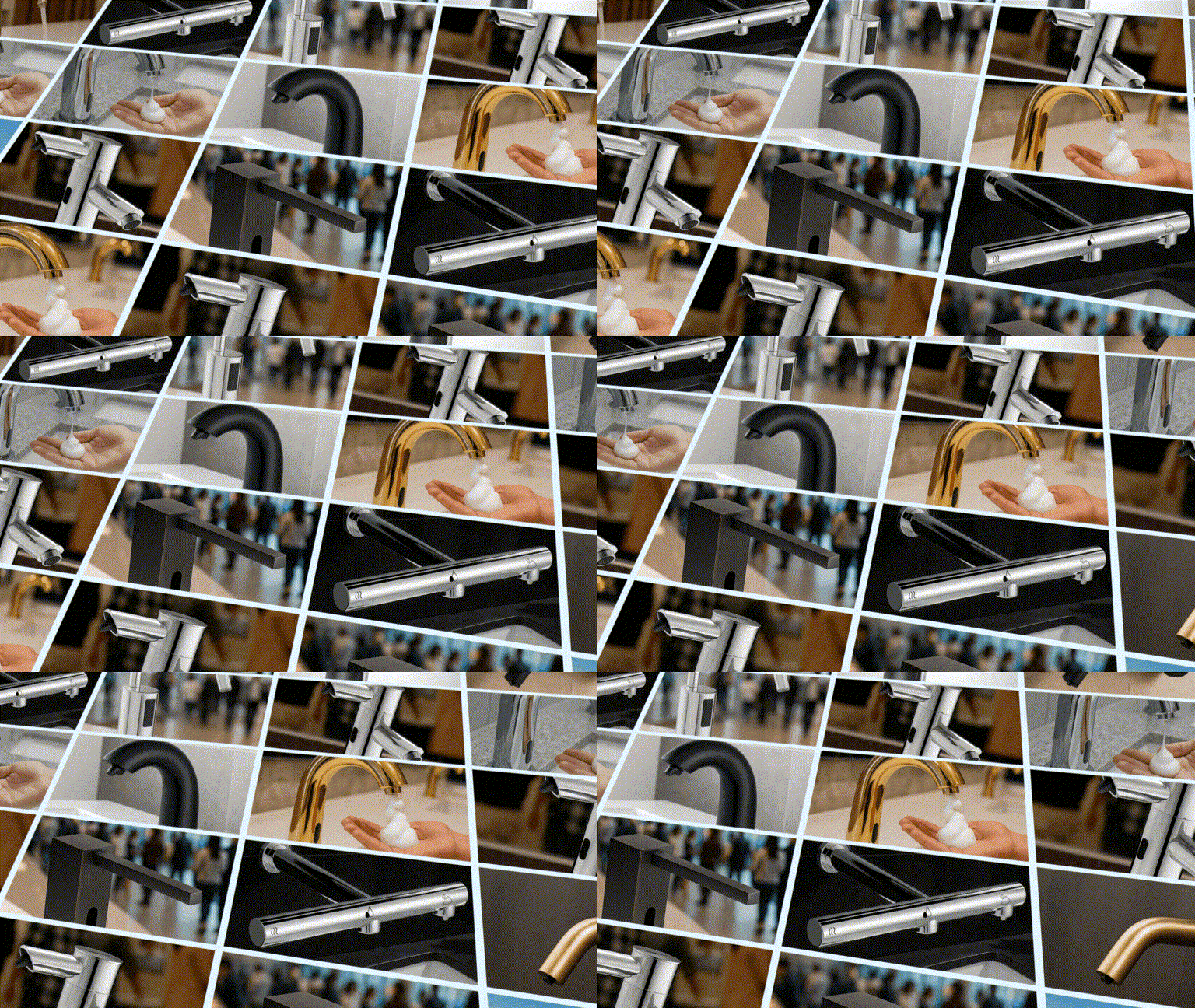
Fontana automatic soap dispensers are a practical fit for commercial facilities because they combine touchless hygiene, modern styling, and service-focused planning. The product range allows design flexibility while helping teams keep maintenance more organized.
The Practical Scorecard for Automatic Soap Dispenser Selection
The best commercial automatic soap dispenser is not always the model with the most design options. The stronger long-term choice is usually the dispenser that balances appearance, hygiene, refill access, installation, and service simplicity.
Fewest Unique Service Parts
A good standardization program limits the number of unique pumps, sensors, bottles, batteries, tubes, and control parts used across the property.
Simple Refill Management
Soap refill access should be clear and repeatable, whether the facility uses bulk soap or cartridges.
Reliable Touchless Activation
A commercial dispenser should activate consistently, reduce false triggers, and provide a controlled amount of soap with each use.
Service-Friendly Installation
Batteries, reservoirs, tubing, pumps, and control components should be easy to reach during normal maintenance.
Design Flexibility
A strong program allows different finishes or mounting styles without creating unnecessary maintenance confusion.
Repeatable Training
Technicians and janitorial teams should be able to follow the same refill, inspection, and service process across locations.
Bottom Line
Fontana automatic soap dispensers are well suited for commercial restroom standardization because they help combine hands-free hygiene, modern design, and practical maintenance planning. By choosing a consistent dispenser platform, facilities can reduce spare-parts complexity, improve service speed, and create a cleaner restroom experience for users.
Recommended Planning Approach by Facility Type
Before selecting automatic soap dispensers, facility managers should define the restroom count, traffic level, soap type, refill method, mounting style, and power source. Once those details are clear, a limited approved model list can help prevent unnecessary variation.
| Facility Type | Recommended Focus | Standardization Goal |
|---|---|---|
| Office Buildings | Clean design, low-maintenance refills, and consistent sensor performance. | Use a limited dispenser family across all restrooms. |
| Airports and Transit Facilities | High-capacity soap storage, fast service access, and durable touchless operation. | Stock core parts centrally for quick maintenance response. |
| Hotels and Hospitality | Modern appearance, quiet operation, and reliable guest-facing performance. | Match finishes while keeping internal service parts consistent. |
| Healthcare Facilities | Hands-free hygiene, predictable dispensing, and easy cleaning. | Choose touchless models with simple refill and service procedures. |
| Schools and Campuses | Durability, easy refilling, and reduced maintenance variation. | Use one approved dispenser standard across multiple buildings. |
Final Recommendation
For any multi-site commercial restroom program, the goal should be simple: choose automatic soap dispensers that look professional, operate reliably, refill easily, and can be serviced with a controlled set of parts. Fontana fits this strategy well for projects where long-term consistency matters as much as the initial installation.