
Commercial Touchless Faucets With Automatic Soap Dispensers: Design, Performance, Hygiene, and Specification Guide
Commercial touchless faucets paired with automatic soap dispensers create a coordinated handwashing station designed for high-use restrooms, hospitality properties, healthcare environments, offices, educational facilities, transportation buildings, and other public spaces. When properly selected and installed, the faucet and dispenser can work together to improve fixture usability, support more consistent handwashing workflows, reduce unnecessary surface contact, and simplify the visual organization of the lavatory area.

Why Commercial Touchless Faucets and Automatic Soap Dispensers Are Often Specified Together
A commercial handwashing station performs more effectively when the water-delivery fixture and soap dispenser are considered as one coordinated system rather than two unrelated accessories. Both components rely on predictable user positioning, reliable activation, accessible placement, appropriate power, and routine maintenance.
Read More Show Less
Pairing a sensor faucet with an automatic dispenser can also create a cleaner countertop because users do not need to manually operate faucet handles or press a dispenser lever. For architects, engineers, facility teams, and contractors, coordinated selection helps establish consistent fixture spacing, finish, sensor behavior, maintenance access, and service expectations across multiple lavatories.
Commercial Touchless Faucet and Soap Dispenser System Components
Reliable performance depends on more than the visible faucet and dispenser. Sensors, valves, pumps, power supplies, tubing, filters, and service access all influence long-term operation.
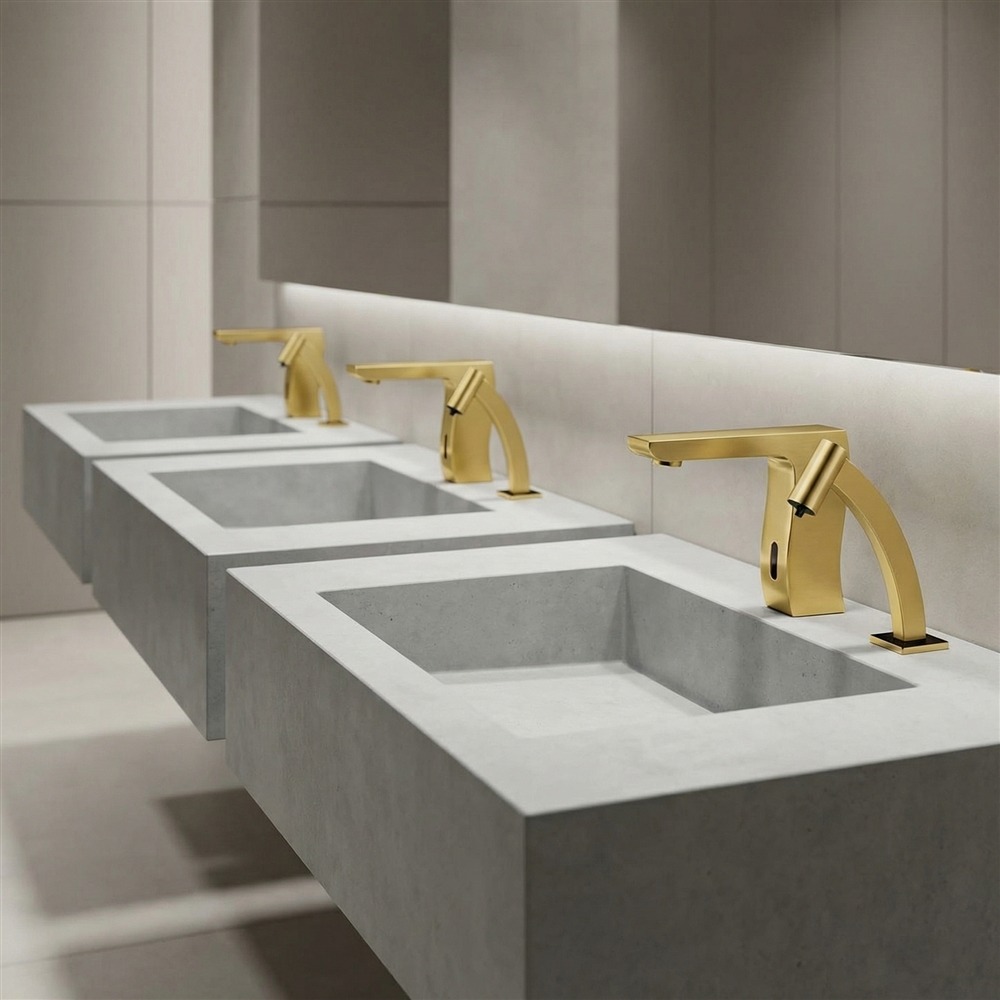
Commercial Touchless Faucet
The faucet controls water delivery without requiring the user to operate a conventional handle. A sensor detects hand presence within the intended activation area and signals the valve or solenoid to open. Water stops when the user moves away or when the control logic reaches its programmed shutoff condition.
Read More Show Less
Commercial models may incorporate infrared sensing, other presence-detection technologies, adjustable detection parameters, filters, mixing provisions, and different power configurations. The visible faucet should therefore be evaluated together with the below-counter components that control water delivery.
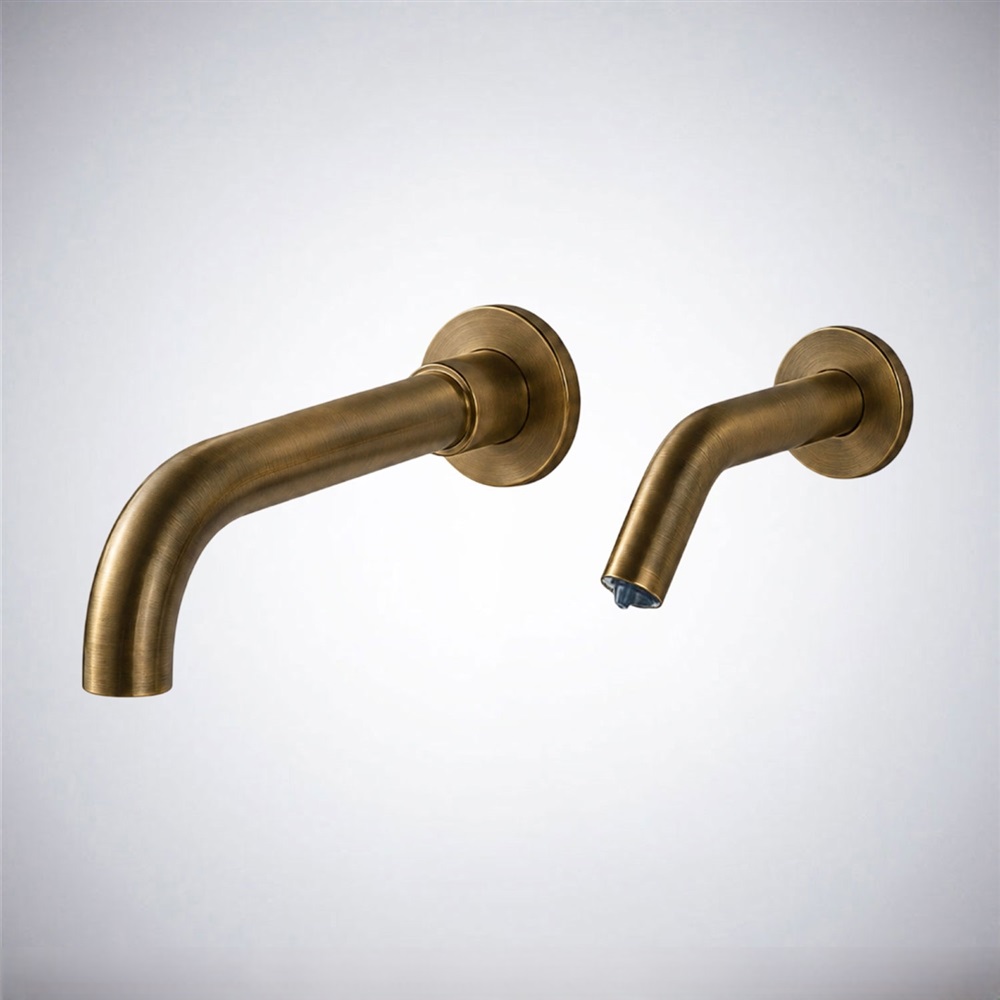
Automatic Soap Dispenser
An automatic soap dispenser releases a measured amount of soap after detecting the user’s hand beneath the dispensing outlet. In commercial applications, dependable sensor behavior and predictable dispensing are important because a single dispenser may experience frequent use throughout the day.
Read More Show Less
Designers and facility teams should review the soap reservoir arrangement, pump configuration, compatible soap viscosity, refill method, sensor position, power source, tubing routing, and service access. These factors can influence both user experience and maintenance workload.
Typical System Components and Their Functions
Understanding what is above and below the counter helps prevent specification gaps during design, procurement, installation, and commissioning.
| Component | Primary Function | Specification Consideration |
|---|---|---|
| Faucet Sensor | Detects hand presence at the lavatory | Detection area should correspond with basin geometry and expected user position. |
| Solenoid Valve | Starts and stops water flow | Confirm service access, connection requirements, and compatibility with the control system. |
| Soap Sensor | Detects a hand below the dispensing outlet | Position should minimize accidental activation while remaining intuitive to users. |
| Soap Pump | Moves soap from the reservoir to the outlet | Verify soap compatibility, delivery volume, tubing, and service requirements. |
| Power Supply | Provides operating power | Battery, hardwired, plug-in, or combined strategies should be coordinated early. |
| Filter or Strainer | Protects faucet components from debris | Should remain accessible for inspection and cleaning. |
| Soap Reservoir | Stores soap for dispensing | Capacity should reflect restroom traffic and refill strategy. |
| Mixing Provision | Establishes suitable water temperature where required | Coordinate temperature-control requirements with plumbing design and applicable project criteria. |

How Sensor Operation Affects Everyday Use
Sensor performance determines whether a touchless fixture feels natural or frustrating to use. The faucet should activate when hands enter the intended washing zone without responding unnecessarily to surrounding surfaces. The soap dispenser should recognize a hand beneath the outlet without dispensing before the user is ready.
Read More Show Less
Lavatory shape, reflective materials, ambient conditions, sensor angle, mounting location, and nearby objects can influence detection. For that reason, the sensor faucet and dispenser should be evaluated in the context of the actual sink rather than as isolated products. Proper commissioning is particularly valuable in multi-lavatory commercial projects where small inconsistencies can be repeated across many stations.
Hygiene and User-Contact Considerations
Touchless operation changes how users interact with the handwashing station by reducing the number of fixture surfaces that need to be manually operated.
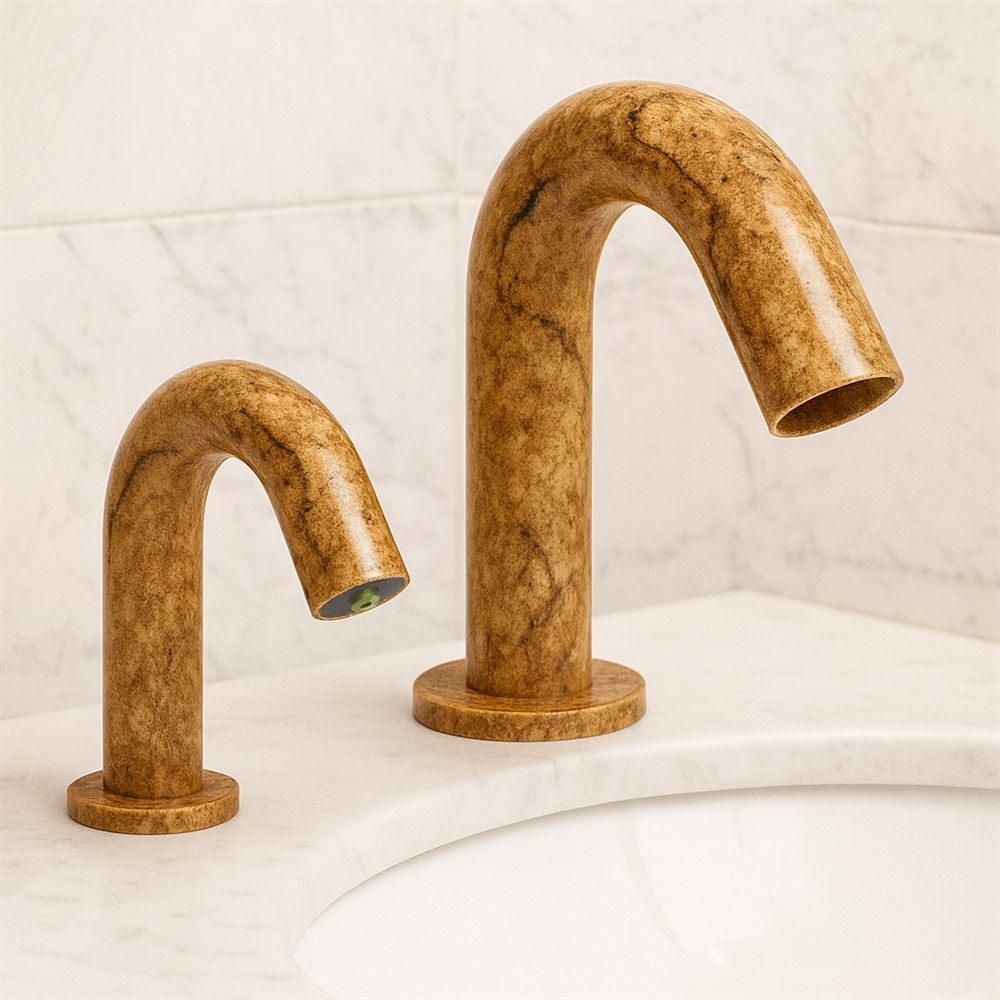
Reduced Manual Contact
Users can receive soap and water without gripping faucet handles or pressing a manual dispenser. This creates a more consistent touchless sequence at the lavatory and can be especially useful in heavily used public restrooms.

Controlled Soap Dispensing
An automatic dispenser can provide a repeatable dose rather than depending on how strongly or how many times a user presses a manual mechanism. Appropriate calibration helps balance sufficient soap delivery with practical refill frequency.

Simplified Lavatory Interaction
A well-coordinated system can make the sequence of receiving soap, washing, and rinsing more intuitive. Consistent fixture placement also gives architects and facility teams a cleaner visual arrangement across banks of lavatories.
Water Flow and Commercial Faucet Performance
Water delivery should be appropriate for the intended commercial lavatory, applicable project criteria, user comfort, and conservation objectives. A higher flow rate is not automatically better. The objective is to provide enough water for effective handwashing while avoiding unnecessary consumption or excessive splashing.
Coordinate Flow With Basin Geometry
Spout height, spout reach, aerator characteristics, water pressure, basin depth, drain position, and sensor activation location all influence splash behavior. A faucet that performs correctly on one basin may behave differently on a shallower or more reflective lavatory.
Read More Show Less
Commercial Water Efficiency
Where water-use requirements apply, the faucet specification should identify the intended flow rate clearly rather than relying on a generic product family description. The installed outlet, aerator, pressure conditions, and control components should correspond with the scheduled fixture performance.
Shutoff Behavior
Automatic shutoff is one of the defining operating characteristics of a sensor faucet. The control system should stop water promptly when the user’s hands leave the intended detection area while avoiding interruptions during normal washing.
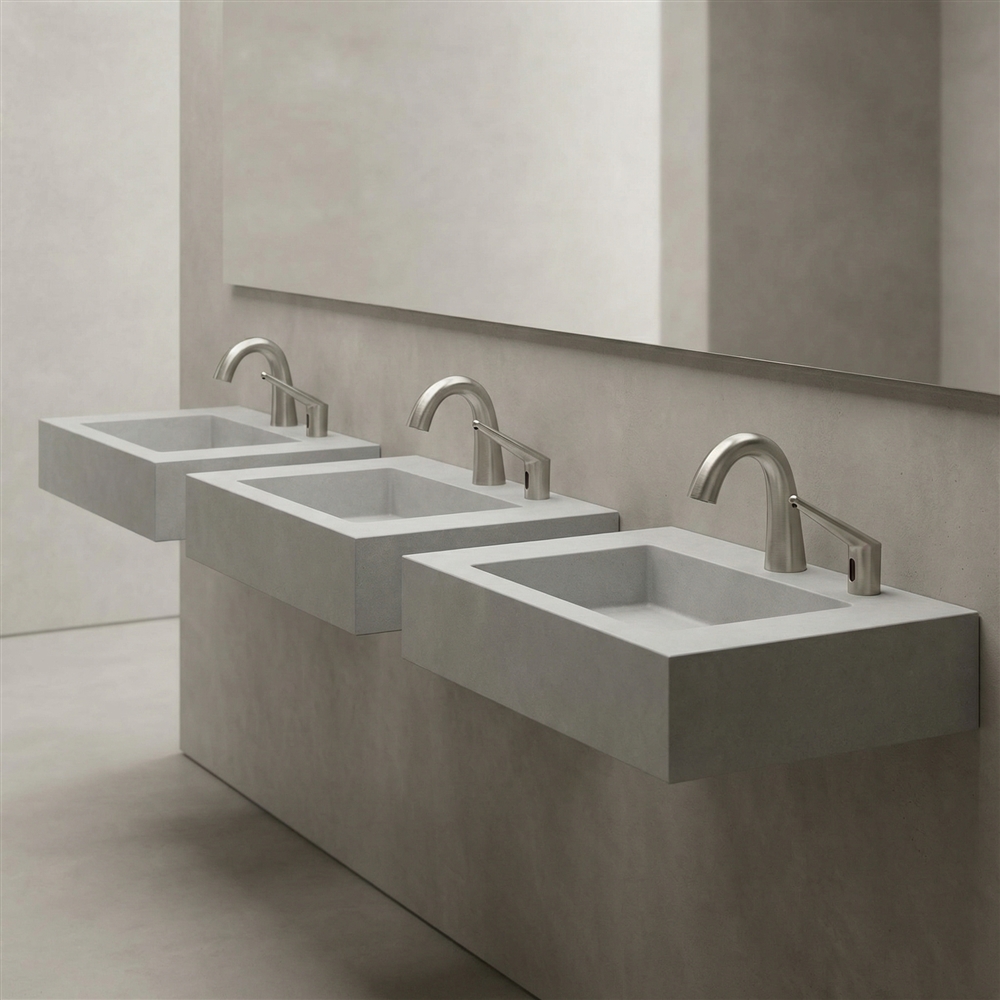
Soap Capacity, Compatibility, and Refill Planning
Soap dispenser performance depends on more than the visible spout. Commercial specifications should consider the entire path from the soap reservoir to the dispensing outlet. Pump design, tubing, soap viscosity, refill method, and reservoir size all affect serviceability.
Read More Show Less
A larger reservoir may reduce refill frequency in high-traffic facilities, while a smaller individual reservoir can simplify localized servicing. Facility managers should also know whether the selected dispenser is intended for bulk-fill soap, a specific cartridge system, or another supply arrangement.
Soap compatibility should be confirmed before operation. A pump designed for one viscosity range may not perform consistently with a substantially different formulation. Standardizing the soap type across a facility can simplify purchasing and maintenance.
Power Options for Touchless Faucets and Soap Dispensers
Power strategy affects installation complexity, maintenance frequency, service access, and long-term facility operations.
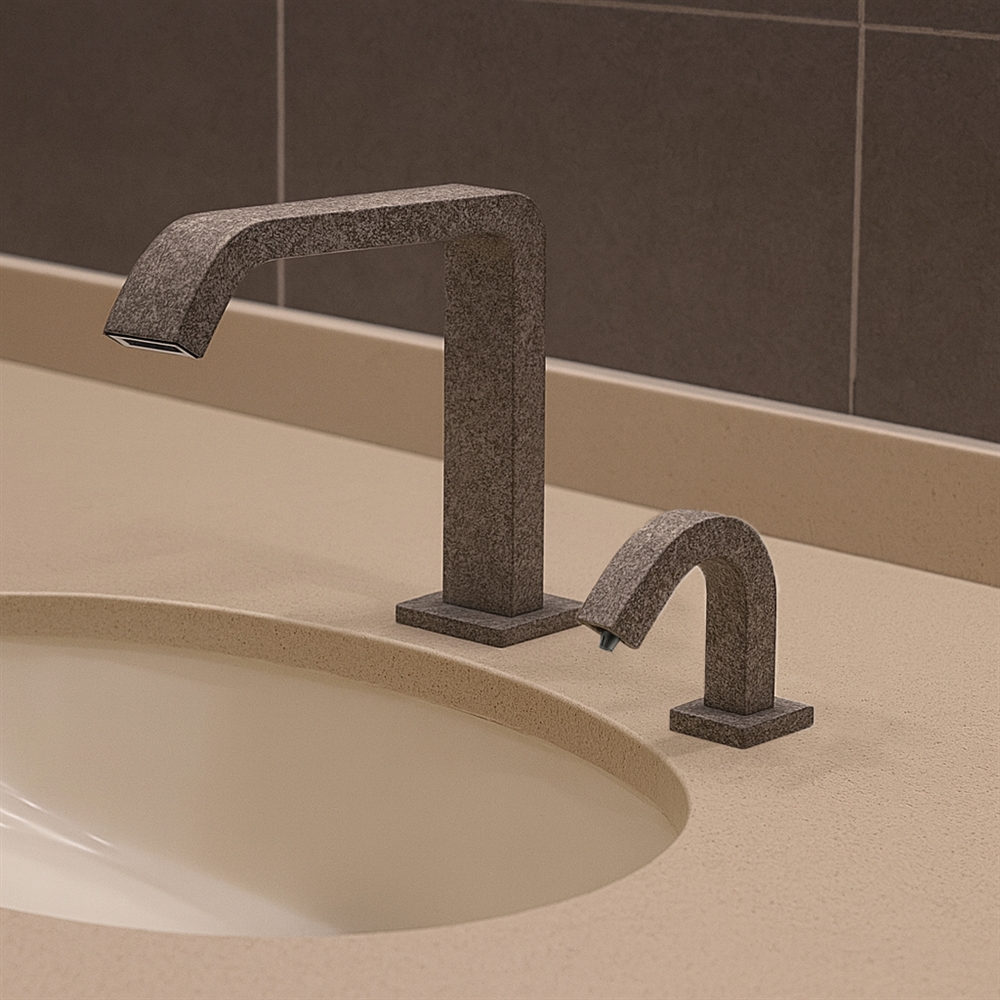
Battery-Powered Systems
Battery operation can simplify installations where electrical service is unavailable near the lavatory. The maintenance plan should include battery condition checks and convenient access to the battery holder without dismantling unrelated plumbing components.
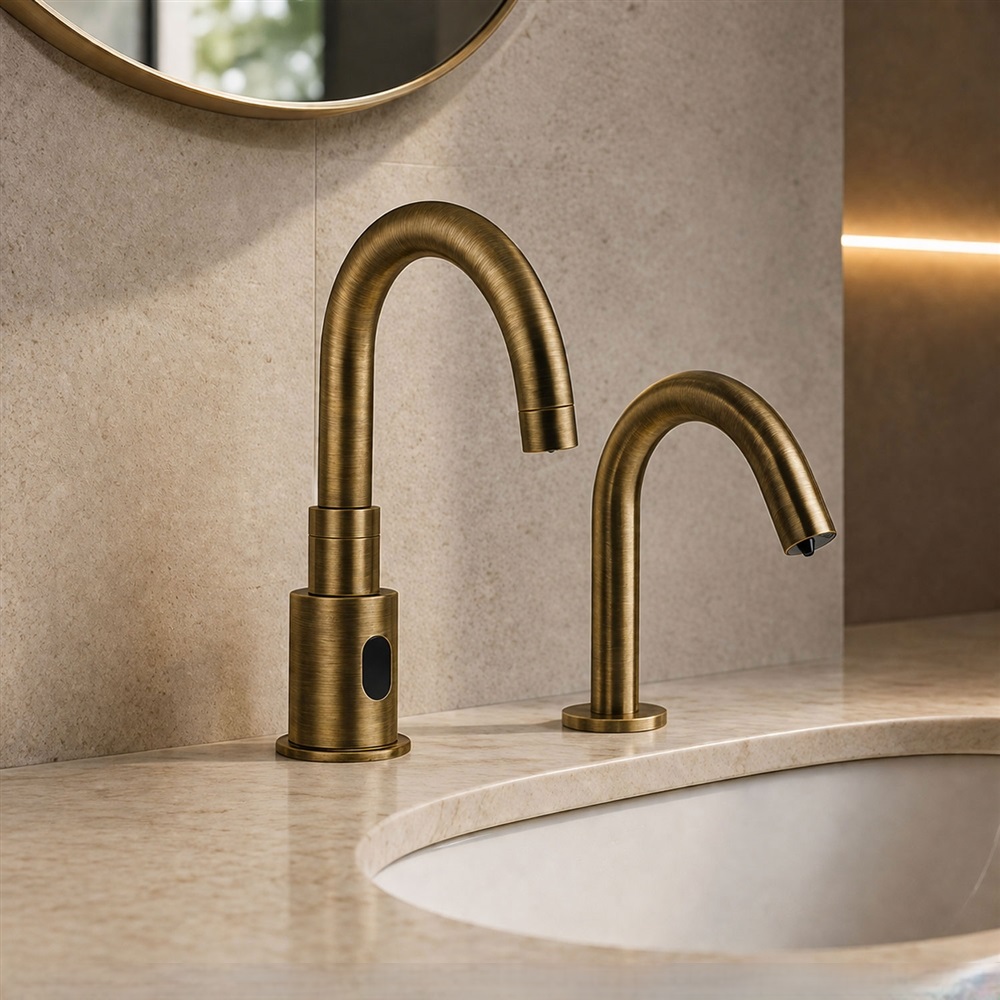
AC-Powered Systems
Hardwired or plug-in power can reduce routine battery replacement in facilities with many lavatories. Electrical requirements, transformer location, cable routing, access panels, and coordination with other trades should be established during design.
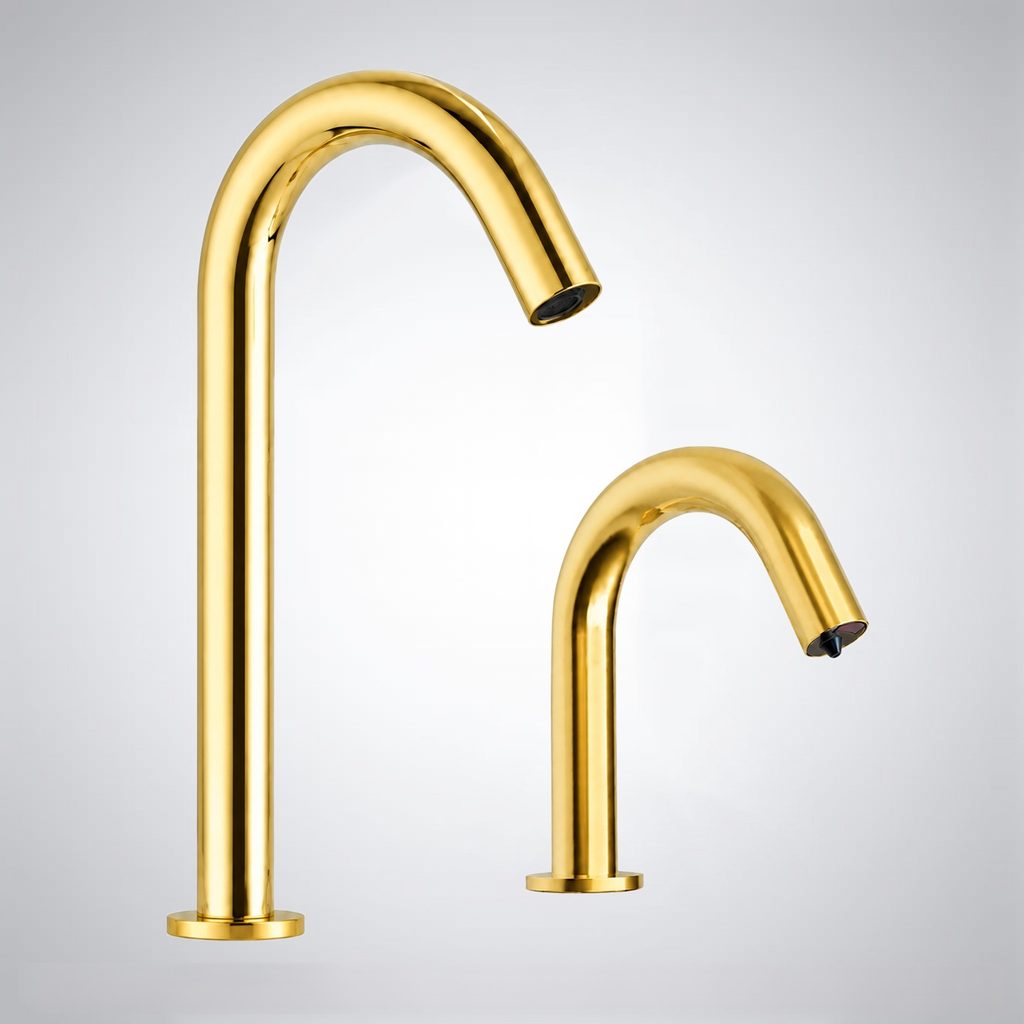
Coordinated Power Planning
The faucet and dispenser do not necessarily need to use the same power source, but their requirements should be coordinated. Standardizing power configurations across the project can make replacement parts, training, inspections, and preventive maintenance easier to manage.
Power Strategy Comparison
The most appropriate approach depends on project infrastructure and the owner’s maintenance strategy.
| Power Approach | Project Consideration | Maintenance Consideration | Coordination Need |
|---|---|---|---|
| Battery | Useful where nearby electrical service is limited | Requires planned battery inspection and replacement | Provide accessible battery compartments |
| AC / Plug-In | Requires electrical coordination near the fixture | Reduces routine battery replacement | Coordinate transformers, outlets, or wiring routes |
| Combined Strategy | May be used where project-specific resilience is desired | Service procedures should clearly identify both power sources | Document controls and wiring carefully |
Installation Planning Above and Below the Counter
A clean countertop does not mean the system is simple below the basin. Sensor controls, water connections, solenoid valves, mixing components, soap reservoirs, pumps, tubing, power supplies, and drain piping may all occupy the same cabinet or chase.
Read More Show Less
Coordination should begin before countertops are fabricated. Faucet holes, dispenser holes, backsplash clearance, sensor position, supply routing, reservoir location, service access, and accessible knee space can all influence the final arrangement.
Components should not be placed where they interfere with traps, shutoff valves, structural supports, waste piping, electrical equipment, or required user clearances. A coordinated rough-in drawing is particularly valuable when multiple trades are involved.
Commercial Applications
Touchless faucet and automatic soap dispenser systems can be adapted to different traffic levels, maintenance programs, architectural finishes, and operational priorities.
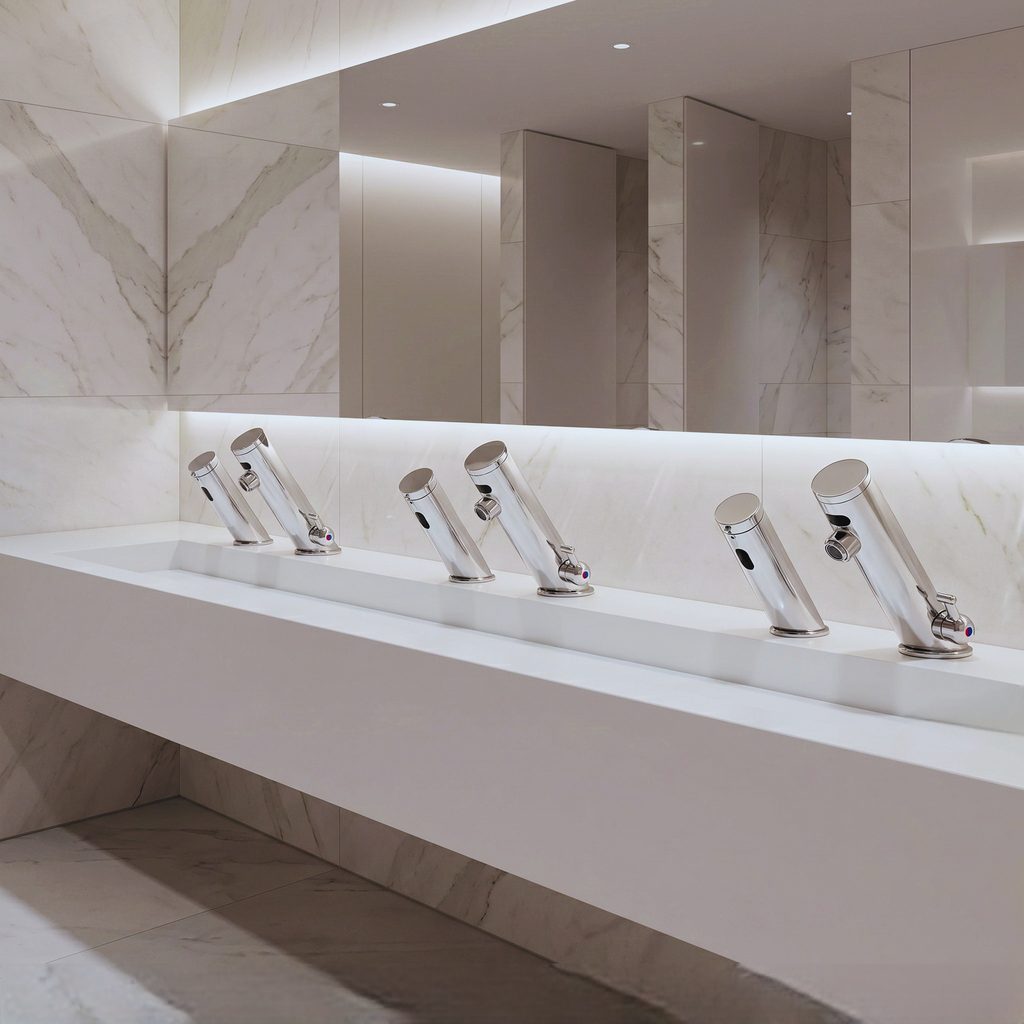
Healthcare Facilities
Healthcare projects may prioritize dependable activation, controlled water delivery, clear maintenance procedures, and fixture selections that support the facility’s infection-control and hand-hygiene practices.
Hotels and Hospitality
Hospitality facilities often balance appearance with serviceability. Coordinated finishes, quiet operation, intuitive sensor response, and concealed below-counter equipment can contribute to a cleaner guest restroom presentation.
Airports and Transportation Buildings
High-volume transportation facilities benefit from components selected for frequent use, straightforward servicing, accessible replacement parts, and maintenance procedures that can be performed without closing large portions of the restroom.
Office and Corporate Facilities
Office buildings can use coordinated touchless fixtures to establish a consistent restroom standard across tenant floors while simplifying fixture replacement, staff training, and consumable planning.
Schools and Universities
Educational environments may require fixtures that tolerate frequent daily use while remaining simple for facility personnel to inspect, refill, clean, and service across multiple buildings.
Public and Civic Buildings
Libraries, government buildings, recreation facilities, venues, and other public spaces can benefit from standardized fixture packages that simplify procurement and provide a consistent handwashing experience.
Coordinating Faucet and Soap Dispenser Finishes
When the faucet and dispenser are installed side by side, visual coordination becomes important. Similar proportions, finish tones, spout geometry, and mounting relationships can make the lavatory appear intentional rather than assembled from unrelated components.
Chrome and brushed metallic finishes remain practical options for many commercial interiors, while matte black, brushed gold, and other architectural finishes may be used where the restroom design requires a more distinctive appearance. Finish selection should consider cleaning procedures, visual expectations, and consistency with surrounding hardware.
Chrome
A familiar commercial finish that integrates easily with many restroom fixture packages.
Brushed Metallic
Provides a softer visual character and can coordinate with other brushed restroom hardware.
Architectural Finishes
Matte black, gold-toned, and specialty finishes can support hospitality and design-focused restroom interiors.
Maintenance Should Be Considered During Specification
A commercial touchless system is easier to operate over its service life when maintenance access is planned from the beginning. Components that routinely require inspection should not be hidden behind inaccessible panels or blocked by unrelated piping.
Read More Show Less
Typical maintenance activities can include cleaning faucet outlets, inspecting strainers, checking sensor windows, replacing batteries, confirming electrical connections, refilling soap, cleaning dispenser outlets, inspecting tubing, and verifying that the soap pump operates consistently.
Standardizing models across a property can also reduce the number of replacement parts and maintenance procedures the facility team must manage.
Commercial Maintenance Planning
Preventive inspection helps identify minor issues before they become fixture outages.
| Area | What to Review | Why It Matters |
|---|---|---|
| Sensor Windows | Cleanliness, obstruction, and alignment | Helps maintain predictable user detection |
| Faucet Outlet | Aerator or outlet condition | Supports consistent water pattern and flow |
| Water Filter | Debris accumulation | Protects internal valve components |
| Soap Outlet | Dried soap or buildup | Helps prevent inconsistent dispensing |
| Soap Reservoir | Fill level, cleanliness, and connections | Reduces unexpected dispenser downtime |
| Pump and Tubing | Connections, priming, and soap movement | Supports reliable delivery to the dispenser outlet |
| Power | Batteries, wiring, transformers, or connectors | Prevents avoidable fixture outages |
What to Review Before Specifying a Commercial System
A complete specification should address the operating characteristics of both fixtures and the infrastructure required to support them.
Commercial Touchless Faucet and Soap Dispenser Specification Checklist
Design Coordination at the Lavatory
Faucet position, dispenser position, basin dimensions, countertop configuration, and below-counter equipment should be reviewed together.
Coordinate Fixture Spacing
The faucet and dispenser should be positioned so their operating zones do not interfere with each other. The user should be able to receive soap and move naturally to the water stream without reaching awkwardly across the basin.
Read More Show Less
Multiple-lavatory counters require additional attention because the spacing pattern is repeated. Consistent centerlines and coordinated countertop penetrations help create a more orderly installation and simplify field layout.
Protect Service Space Below the Sink
The area below a commercial lavatory can become crowded quickly. Water supplies, drains, valves, sensor controls, transformers, soap reservoirs, pumps, and tubing need logical positions that remain accessible after construction.
Read More Show Less
Equipment placement should also respect required clearances and protect components from accidental impact. Clear labeling can make future servicing substantially easier when several identical lavatories are located in the same restroom.
Coordinated Procurement Can Simplify Commercial Projects
Specifying the faucet and automatic soap dispenser as a coordinated fixture package can reduce uncertainty about appearance, installation, power, and maintenance. This is particularly useful for projects with many restrooms where small specification differences can become significant once multiplied across numerous lavatories.
Architects and specifiers should review technical documentation before final selection, while contractors should confirm actual rough-in and electrical requirements before installation. Facility teams should be provided with clear information about filters, batteries, soap refills, replacement components, and troubleshooting procedures at turnover.
Key Evaluation Areas for a Coordinated Commercial System
| Evaluation Area | Touchless Faucet | Automatic Soap Dispenser |
|---|---|---|
| Activation | Reliable hand detection within the intended washing area | Reliable detection beneath the dispensing outlet |
| Delivery | Stable water stream appropriate for the basin | Consistent soap volume suitable for normal handwashing |
| Power | Battery, AC, or project-specific configuration | Battery, AC, or project-specific configuration |
| Service Access | Sensor controls, solenoid, filter, power, and supply connections | Pump, reservoir, tubing, sensor controls, and power |
| Consumables | Water and replaceable service components | Compatible soap and replacement service components |
| Design Coordination | Spout reach, finish, mounting, basin relationship | Outlet reach, finish, mounting, hand-detection location |
| Facility Planning | Inspection and preventive maintenance | Refilling, priming, cleaning, and preventive maintenance |
Final Thoughts
Commercial touchless faucets with automatic soap dispensers are most effective when treated as a complete handwashing system rather than separate countertop products. Sensor behavior, water delivery, soap dispensing, power, fixture spacing, basin geometry, service access, and maintenance all contribute to everyday performance.
For architects and engineers, coordinated specification can reduce conflicts between plumbing, electrical, countertop, and accessibility requirements. For contractors, clear rough-in information helps produce a cleaner installation. For facility managers, accessible components, standardized models, appropriate soap capacity, and documented maintenance procedures can make long-term operation easier.
A carefully planned touchless faucet and automatic soap dispenser combination therefore does more than create a modern appearance. It establishes a coordinated commercial handwashing station designed around usability, serviceability, hygiene, resource management, and reliable operation throughout the life of the restroom.