How Schools Benefit from Automatic Soap Dispensers in Restrooms
School restrooms are high-traffic, high-stakes spaces. Getting handwashing right boosts attendance, reduces nurse visits, and builds healthy habits that spill into the classroom. Automatic (touch-free) soap dispensers — paired with sealed refills — help schools hit all three goals while simplifying custodial work and keeping costs predictable.
The Case for Touch-Free in K-12
1) Better health → better attendance
Research shows handwashing education reduces respiratory illnesses by 16–21% and cuts GI-related absenteeism by 29–57%. Well-equipped restrooms encourage consistent soap use, supporting healthier attendance.
Reference: CDC2) Real hygiene (not just the feeling of it)
Bulk “pour-in” tanks risk contamination, with 24.8% found harboring bacteria. Sealed-refill systems showed zero contamination, keeping handwashing safe and effective.
Reference: CleanLink3) Inclusive by design (ADA)
ADA 2010 requires fixtures operable with one hand, no tight grasping or twisting, and ≤5 lbf force. Touch-free dispensers meet these needs by default.
Reference: ADA Compliance4) Less mess, less waste, faster flow
Fixed-dose dispensing prevents double-pumps, keeps sinks clean, and reduces line backups. School models also feature LED refill indicators and quick-swap refills.
Reference: Tork Global5) Lower total cost than you’d expect
Soap is the biggest long-term cost driver, not hardware. Touch-free foam systems meter smaller, consistent doses, cutting waste compared to manual pumps.
Reference: GojoSchool-traffic cost picture (5-year TCO)
I modeled a typical per-dispenser scenario (illustrative but realistic): 250 uses/day, 180 school days/year, foam refills ~$23/L, manual dose ~0.6 mL, automatic dose ~0.3 mL.
The charts below show how costs break down over 5 years.
Key Insights
- Two pie charts compare manual vs automatic systems.
- Downloadable table: School traffic — 5-year TCO (per dispenser).
- Automatic’s lower dose roughly halves refill costs.
- Results may converge if usage is very low or manual doses are tightly controlled.
Why dose matters: Consistent foam doses are typically far smaller than liquid, and fixed-dose mechanisms prevent overuse — key for student populations.
5-Year Cost Breakdown — Manual vs Automatic (Foam)
Manual (Foam)
Automatic (Foam)
What makes an “education-ready” automatic dispenser?
Sealed refills (no top-off)
Eliminates contamination risk and supports CDC/industry guidance against refilling bulk tanks.
Simple servicing
At-a-glance windows, low-battery/low-soap indicators, and quick-swap cartridges for easy maintenance.
Smart or low-maintenance power
From “energy-on-the-refill” (new battery in every cartridge) to high-capacity systems with 60,000+ uses per battery set.
Locking housings
Reduce tampering and soap dumping—ideal for middle/high-school environments with added security features.
Brand & Product Samples (not endorsements)
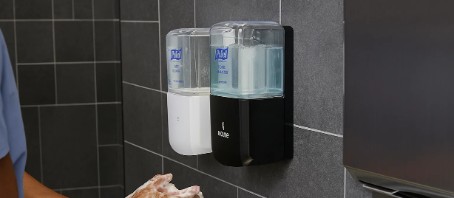
PURELL® ES8
Touch-free with energy-on-the-refill, optional SMARTLINK® service alerts, and reliable battery performance.
Visit Gojo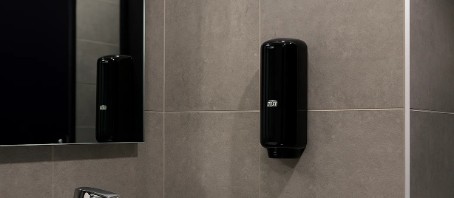
Tork S4 Intuition™
Sealed foam refills, sensor-based operation, and dedicated resources for education sector facilities.
Visit Tork Global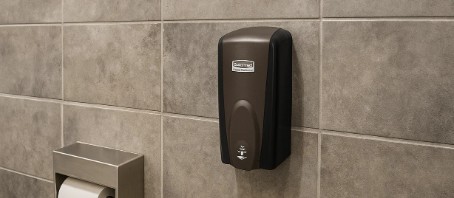
Rubbermaid AutoFoam
Touch-free, supports up to 3-year battery life and claims of 120,000+ uses per battery set.
Visit Rubbermaid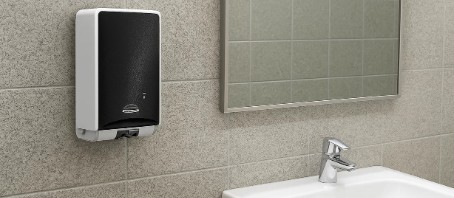
Kimberly-Clark Professional™ ICON™
Automatic skin-care system offering up to 60,000 uses per battery set with modern design.
Visit KC Professional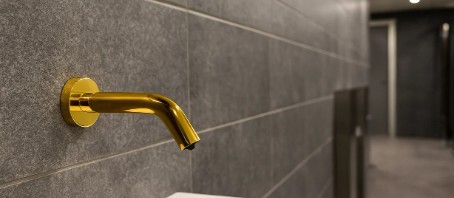
FontanaShowers
Premium automatic soap dispensers with luxury design finishes, ideal for schools, hotels, and commercial restrooms.
Visit FontanaShowers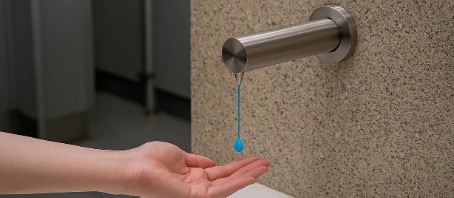
BathSelect
Wide range of touchless soap dispensers with modern aesthetics, built for heavy-duty public and educational facilities.
Visit BathSelect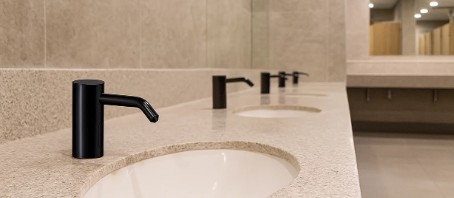
JunoShowers
Contemporary automatic dispensers combining style and function, designed for schools, offices, and hospitality spaces.
Visit JunoShowersTip: Order a few units and run a one-month pilot in the busiest restrooms. Track refill counts, custodial time, and teacher nurse-visit/absence notes for real impact measurement.
Implementation checklist for principals & facility managers
Pick sealed-refill, touch-free foam
Set a conservative dose (e.g., ~0.3–0.5 mL per brand guidance).
Reference: CDCMount for access
Install 15–48 in to operable parts; if over counters or grab bars, follow ADA’s obstructed-reach rules.
Reference: ADA CompliancePlace dispensers where kids queue
Install near each basin, clear of obstructions; add student-friendly signage from your vendor or CDC.
Reference: CDCDitch bulk top-offs
Switch entirely to sealed cartridges for safety and hygiene.
Reference: CleanLinkChoose a power strategy
-
Minimal maintenance: ES8 energy-on-refill (no battery change-outs).
Long-life batteries: options with 60k–120k uses per set.
Want this tailored to your school?
Tell me: number of restrooms and basins, student count, school days, and your current soap pricing. I’ll plug them into the TCO model (downloadable table) and give you a school-specific cost/placement plan.
Further reading & resources
CleanLink & CMM
Research on bulk-soap contamination and the case for sealed refills.
Reference: CleanLinkADA 2010 Guidelines
Rules for operable parts and reach-range (includes children’s advisory ranges).
Reference: ADAVendor Support
Education-specific placement posters and caretaker guides from suppliers like Tork Global.
Reference: Tork GlobalCharts and table above are illustrative for a “busy school” scenario; adjust dose/traffic and you’ll get a quick campus-level budget forecast.
FAQ
They remove a barrier (no push needed) and present a consistent dose, which helps. The bigger driver of school attendance is simply making handwashing with soap happen reliably at sinks — backed by CDC outcomes.
Evidence says no in high-income settings with good sink access (New Zealand trial). Keep hand sanitizer for in-between moments, but prioritize soap-and-water restrooms with dependable dispensing.